Towkay Loke Chow Kit - Penangite and Old Free

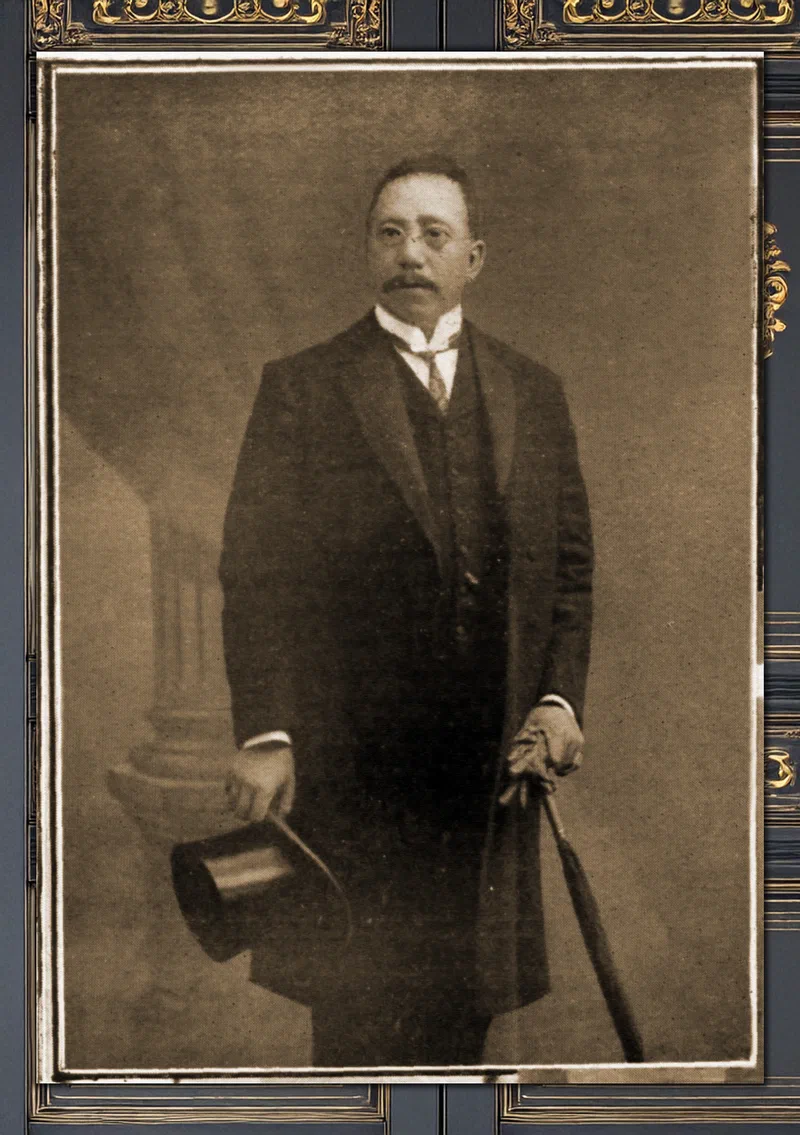
To most Malaysians, the name Chow Kit brings to mind the gritty heart of inner-city Kuala Lumpur—an area once notorious as a hub for drugs and crime, yet equally celebrated for its bustling marketplace and street food. The man behind the name was Loke Chow Kit (陆秋杰, Jyutping: Luk6 Cau1 Git6) who was one of the great Chinese towkays of his day - his company among the largest in KL. He was also regarded as “one of the leading men of the town”.
The encyclopaedic tome, “Twentieth Century Impressions of Malaya”, published in 1908, tells us that: “Mr. Loke Chow Kit, whose residence is at Loke Hall, Kuala Lumpur, Selangor, is the son of Mr. Loke Kum Choon and, like his father, a native of Penang. After completing his education at Penang Free School, he joined the commercial house of Messrs. Katz Bros. He later moved to Messrs. Huttenbach & Co., and when the firm expanded to Kuala Lumpur, he was appointed assistant manager.” Loke Chow Kit would go on to work for the legendary Loke Yew, one of the most influential businessmen of the time, before striking out on his own to establish his own company.
He wasn’t the only one in his family to leave his mark—his brother, Loke Chow Thye, has a road named after him in Penang: Jalan Chow Thye. When Chow Kit passed away on 28 August 1918, his body was sent by steamship to Penang from Port Klang. On 2 September 1918 his funeral began from “87, Bishop Street, and he was laid to rest at Mount Erskine Cemetery”. For all his achievements in Kuala Lumpur, his story came full circle in Penang—a fitting homecoming for an island boy.
Sources:
- Arnold Wright (1908), “Twentieth century impressions of British Malaya: its history, people, commerce, industries, and resources”, pg. 159-160, 923-924
- Pinang Gazette and Straits Chronicle (1918), “Late Mr. Loke Chow Kit”, 3 September 1918, pg. 5
Further reading: https://arecabooks.com/product/the-legacy-and-heritage-of-loke-chow-kit/