The Bougainvillea’s Journey - A Tale of Science and Romance Across the Seas

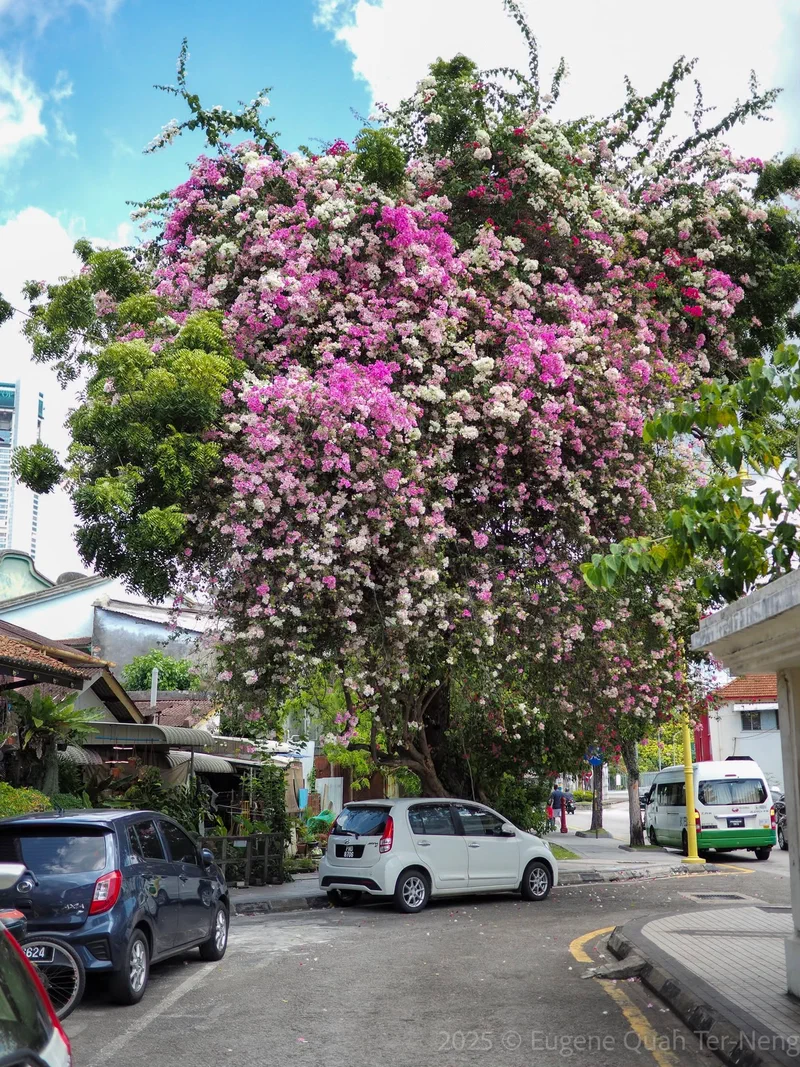
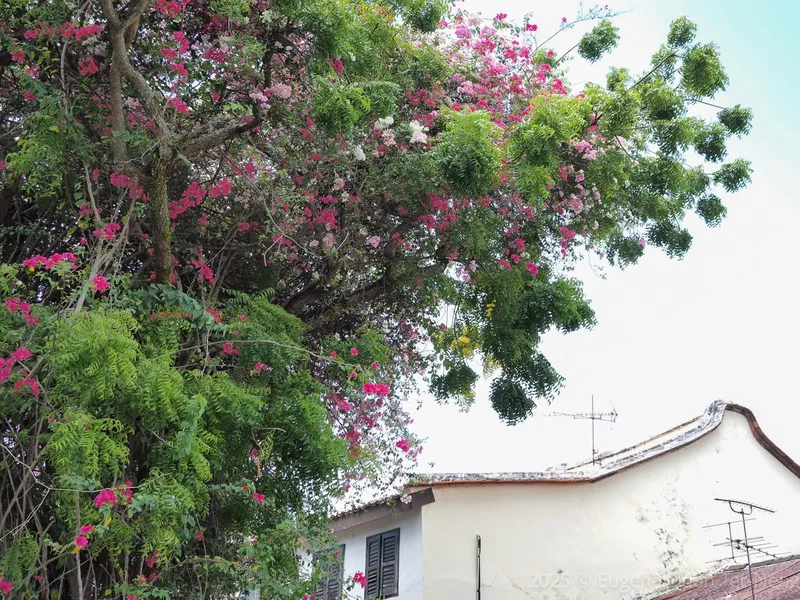
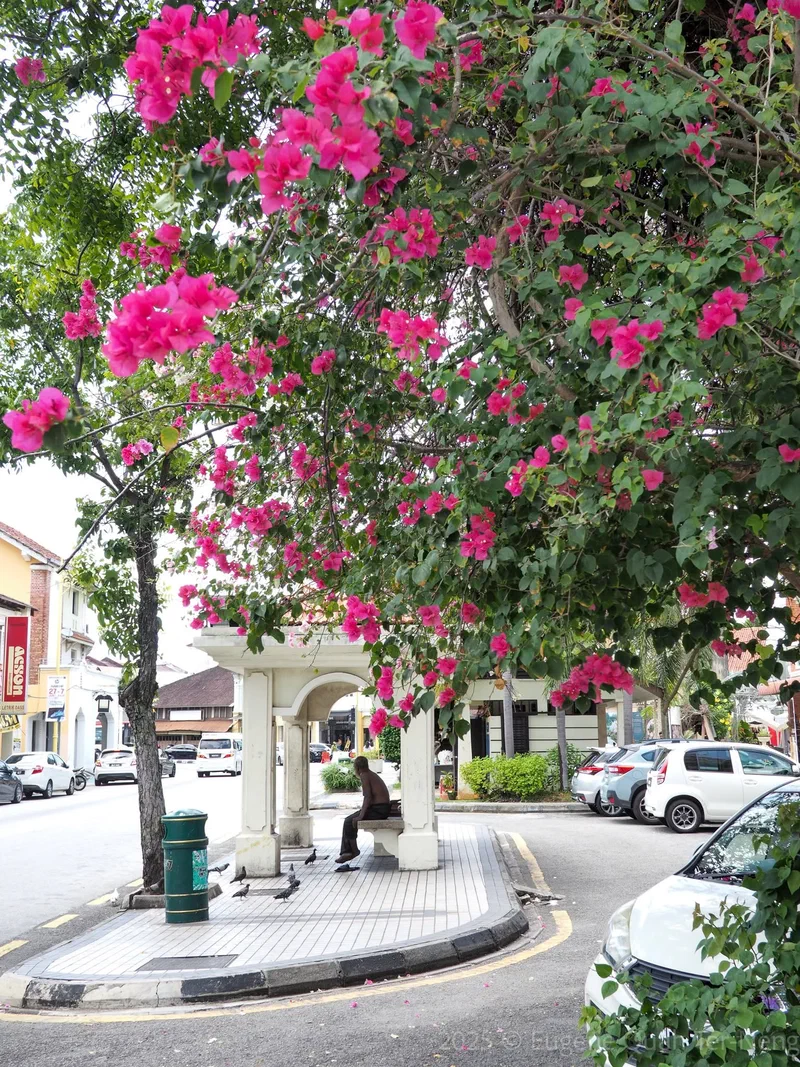
A few days ago, I came across a stunning sight in Kampung Kolam: three varieties of bougainvillea vines tumbling in a riot of colour over a neem tree. The spectacle was breathtaking—even if the poor host tree is slowly being smothered by these vibrant invaders. The scene reminded me of the remarkable story behind this now-ubiquitous plant.
Beauty of the Tropics
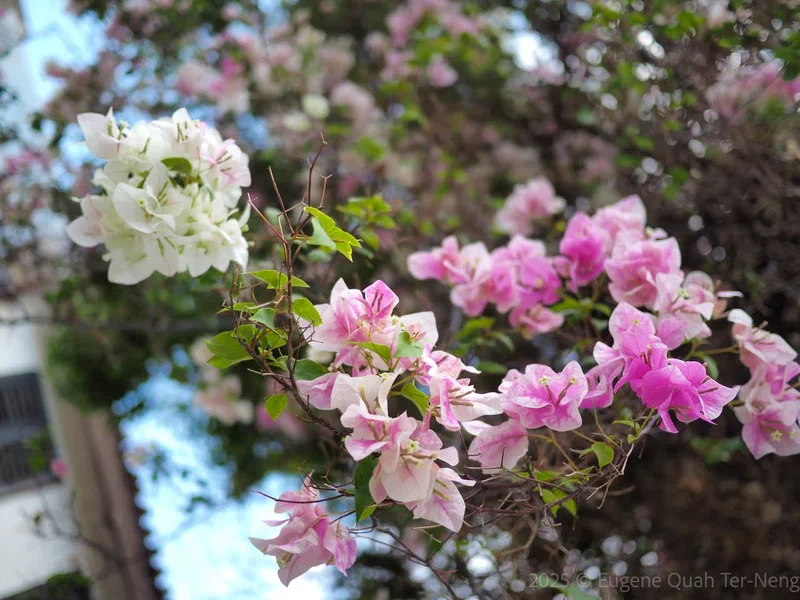
The bougainvillea (Bougainvillea glabra) is a common ornamental shrub found throughout Malaysia. Though native to the Americas, it has taken root across the tropics, including every state in Malaysia, thanks to its brilliant colours and hardy nature. What most people think are colourful petals are actually papery bracts—modified leaves that surround the plant’s tiny, white true flowers. This tissue-like texture explains its Malay name: Bunga Kertas (Paper Flower).
Today, there are over 300 recognised varieties. Its global appeal is reflected in its adoption as the official flower of Xiamen in China’s Fujian Province and as the national flower of Grenada.
Closer to home, when Ipoh—capital of Perak, a state in Malaysia—was granted city status on 27 May 1988, it adopted the bougainvillea as its official flower and styled itself Bandaraya Bunga Kertas, or Bougainvillea City. The moniker, however, never quite caught on.
That this South American plant now adorns gardens and roadside verges across the peninsula is the result of a voyage filled with science, subterfuge, and unexpected compassion.
A Voyage of Discovery and Disguise
In 1766, France launched its first circumnavigation of the globe. The expedition, consisting of the frigate La Boudeuse (The Sulky Woman) and the store ship L’Étoile (The Star), set sail from Nantes on 15 November. It was led by Admiral Louis-Antoine de Bougainville, who had been tasked with collecting plants and animals of potential value to France and its colonies.
Among the crew was the naturalist Philibert Commerçon, a friend of Voltaire and a correspondent of Carl Linnaeus. With him was his personal assistant, a young man named Jean. Unknown to the Admiral and the rest of the crew, “Jean” was actually Jeanne Baret—Commerçon’s lover, “a country girl and amateur botanist with a wide knowledge of medicinal plants”. To bypass the French Navy’s ban on women aboard ship, Baret “bound her breasts in tight strips of linen, wore baggy clothes” to disguise her gender.
Rio de Janeiro
In June 1767, L’Étoile reached Rio de Janeiro, where it met up with La Boudeuse. The expedition stayed from 13th until 25th June. As Commerçon was then incapacitated by a recurring leg ulcer, Baret—during one of many occasions throughout the trip—“assumed the role of chief botanist.”
It was here, in the jungles of Brazil, that “a flamboyant scrambling plant was collected” by her—while still disguised as Monsieur Jean Baret. According to the Admiral’s official account, her ruse was only discovered in April the following year, when observant Tahitians saw through her disguise. The Admiral confined Baret to her cabin for the next stage of the journey after he found out.
The couple was eventually put ashore in Mauritius, where they stayed for three years.
Admiral Bougainville would later praise Baret’s strength and courage in his book about the expedition, “A Voyage Around the World.” He noted that she had followed her lover in “all his botanical walks, amidst the snows and frozen mountains of the Straits of Magellan, and had even on such troublesome excursions carried provisions, arms, and herbals.”
Commerçon died in Mauritius, leaving Baret in difficult financial circumstances. She later married a French officer, Jean Dubernat, and returned to France in 1774—becoming the first woman known to have circumnavigated the globe. The vine she collected in Rio would later be named Bougainvillea after the Admiral. The name was first recorded in 1789, when Antoine Laurent de Jussieu published it in Genera plantarum, noting simply: “Named after M. de Bougainville, leader of Commerçon’s expedition.”
From Rio to Penang
From Europe, the bougainvillea spread through colonial trade routes to India, Southeast Asia, and eventually to the Malay Peninsula and Borneo. By 1892, it was already being grown in Penang at the Botanical Gardens.
Today, as we admire the vibrant bougainvillea cascading over garden walls and trees throughout Malaysia, we can appreciate not only its beauty but also its remarkable history—a flower discovered by a pioneering woman botanist disguised as a man, named after the admiral who showed her and her lover compassion, and now flourishing in gardens around the world.
Sources:
- Simon Black (2025), “Jeanne Baret: the first woman to sail around the world”, Royal Museums Greenwich.
- Kent D. Kobayashi, James McDonnel & John Griffis (2007), “Bougainvillea”, Ornamentals and Flowers, Oct. 2007, OF -38
- Antoine Laurent de Jussieu (1789), “Genera plantarum”, pg. 91
- Matthew Biggs (2019), “The Secrets of Great Botanists: and what they teach us about gardening”
- Louis Antoine de Bougainville (1771), “Voyage autour du monde”