Teluk Bahang from the Tropical Fruit Farm

View from the terrace of the Tropical Fruit Farm towards Teluk Bahang on the north coast of Penang – mountains, sea and sky.
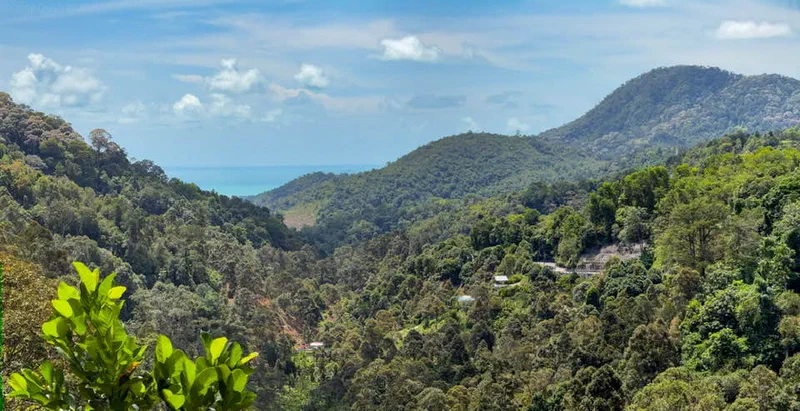
View from the terrace of the Tropical Fruit Farm towards Teluk Bahang on the north coast of Penang – mountains, sea and sky.
I’ll be sharing some exciting new research at this year’s Penang Hill Festival in a 25-minute illustrated talk:
“The Great Hill Before the 19th Century – Early Descriptions and Views”
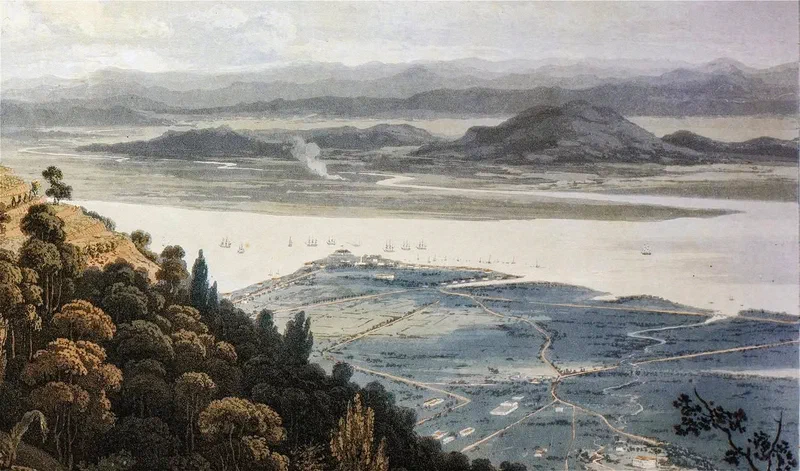
How far back have these hills been described and sketched? Further than you might think. The talk traces early accounts by navigators along the Straits of Malacca, drawing on some remarkable sources – a long 1784 report on Pulo Pinang, a French map from 1786, a first-hand account from the summit written in 1795, and a 1772 sketch of the hills made from the deck of an East India Company ship bound for China.
And the highlight: an extremely rare early 18th-century Malay chart showing Pulau Pinang and a profile of the hills as seen by ships sailing in the Penang Strait.
Dr Ooi Kee Beng and Enzo Sim will also be giving their own talks during the session, followed by a Q&A with the speakers.
Register here: https://docs.google.com/forms/d/e/1FAIpQLScfKvU7L6byM_fOqffSUJgpfSebY6RcI4In1BV_92ouEAdyVA/viewform
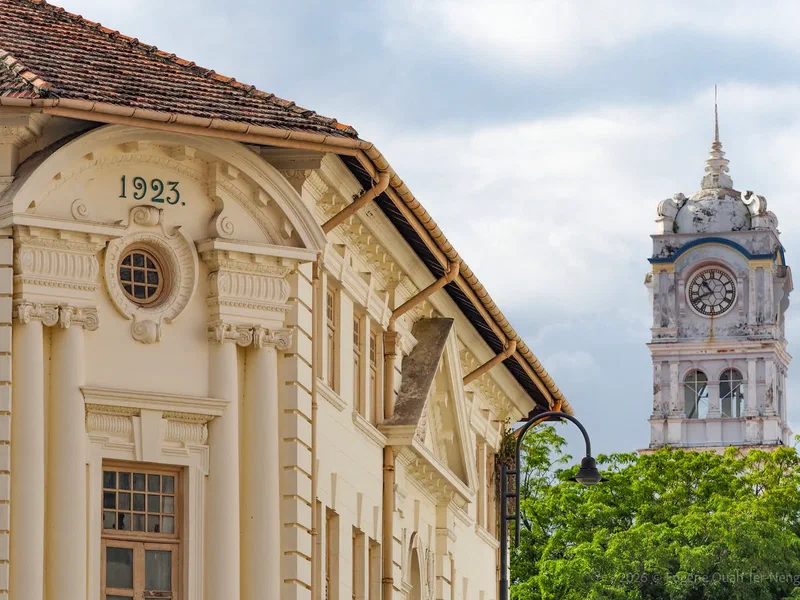
The George Town Dispensary building at 39 Beach Street, designed by architects Swan & McLaren, was completed in 1923 by the contractor Tang Chong Cheong at a cost of $93,661.77. The upper floors of the China Street Ghaut side were occupied by offices, and the name “George Town Chambers” can still be seen.
The clocktower of the Federated Malay States Railways (FMSR) building – today called Wisma Kastam – was, in its heyday, known as one of the grandest railway stations in the Far East and often called “the only railway station without a rail”. It wasn’t really a train station; a passenger would buy a ticket at the station, wait until near departure time, enjoy a meal at the grill and bar, and proceed to the nearby jetty, where a steamer would carry them to the train at the actual railway on the mainland at Prai. Despite the 1907 date on the tower, it was actually completed in 1909, and was then the tallest building in Penang.
Shot on 16 May 2022 with an Olympus PEN-F · 190mm · ISO 200 · f/5.6 · 1/1250s
Source:
Marcus Langdon (2015), George Town’s Historic Commercial & Civic Districts
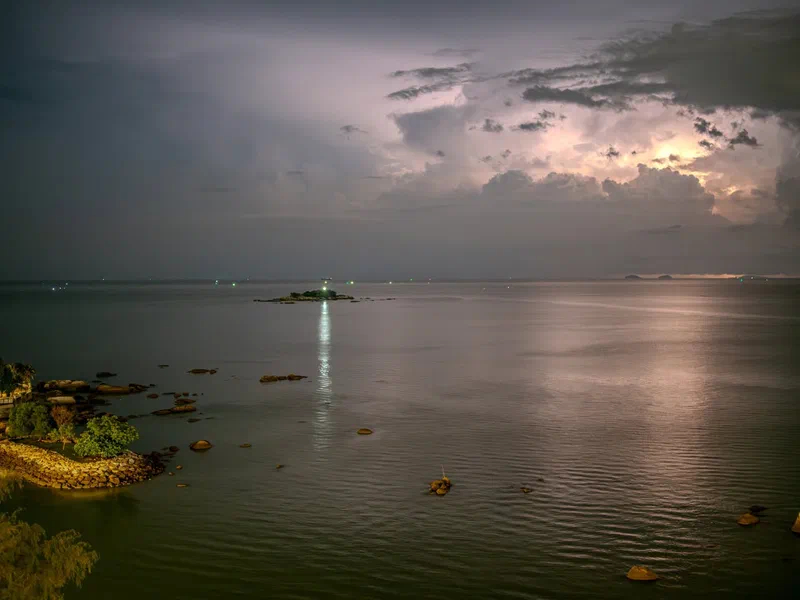
Pulau Tikus (Rat Island), with its light beacon shining and the North Channel washed in the diffuse glow of distant lightning illuminating the clouds. This photo was taken on 5 May 2026 at 10:17 in the evening.
Also known colloquially as Pulau Keramat or Pulau Kechil in earlier times, the islet marks the north-western limit and the entrance to the Penang Harbour. By 1874, a harbour mark obelisk – also called a white pillar – had been erected on the islet and could be seen by ships from many miles away to aid navigation. It was later replaced by a Swedish-made automated acetylene light in 1922. According to the Marine Department, the current lighthouse, more correctly called an automated light beacon, is solar-powered.
The light beacon flashes once every three seconds. It took me a few attempts to capture the scene with a lightning strike coinciding with the flash.
Shot with Olympus PEN · 40mm · ISO 1600 · f/1.7 · 1s
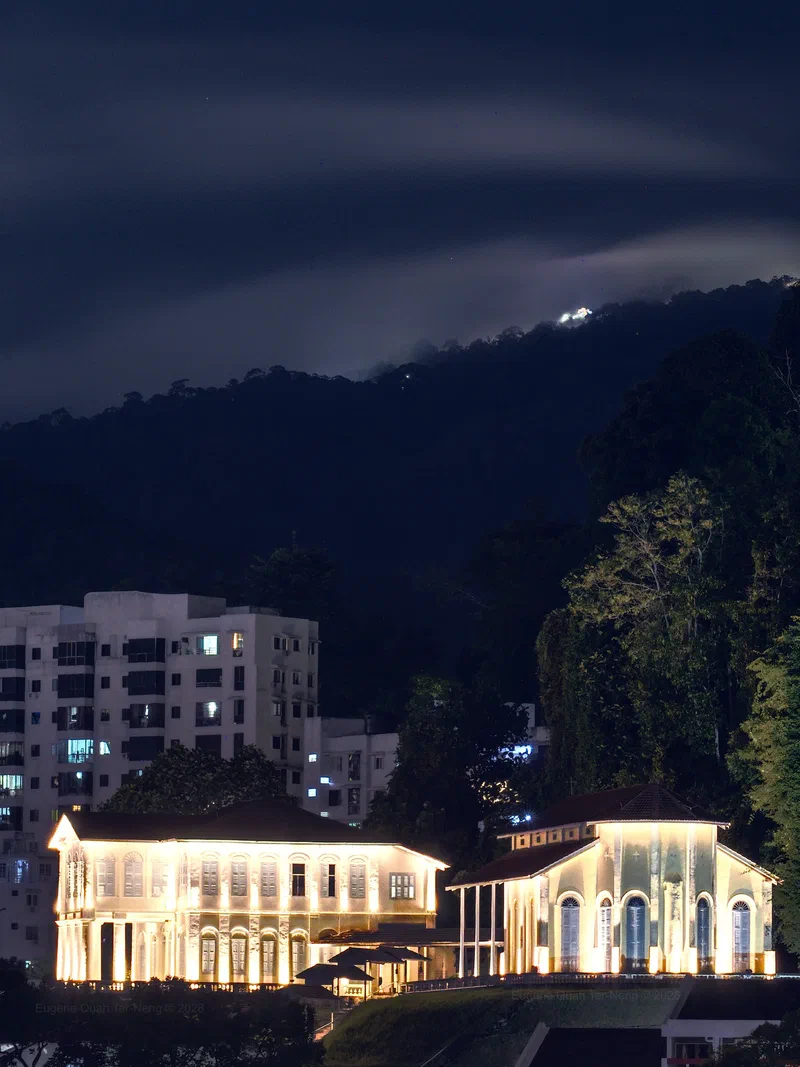
A nighttime view of the College General, perched atop a small hillock known as Bukit Padri (Priest Hill) on the eastern foothills of Mount Erskine (Pearl Hill). On the left stands the Mariophile bungalow (c. 1873); to its right is the Chapel of St. Joseph (1885), also known as the Chapel of the Sacred Heart. In the distance, the lights of the buildings on Penang Hill are visible.
Sources:
MEP (1886), “Mémorial de La Société des Missions Étrangères”
MEP (1887), “Compte Rendu des Travaux de 1886”
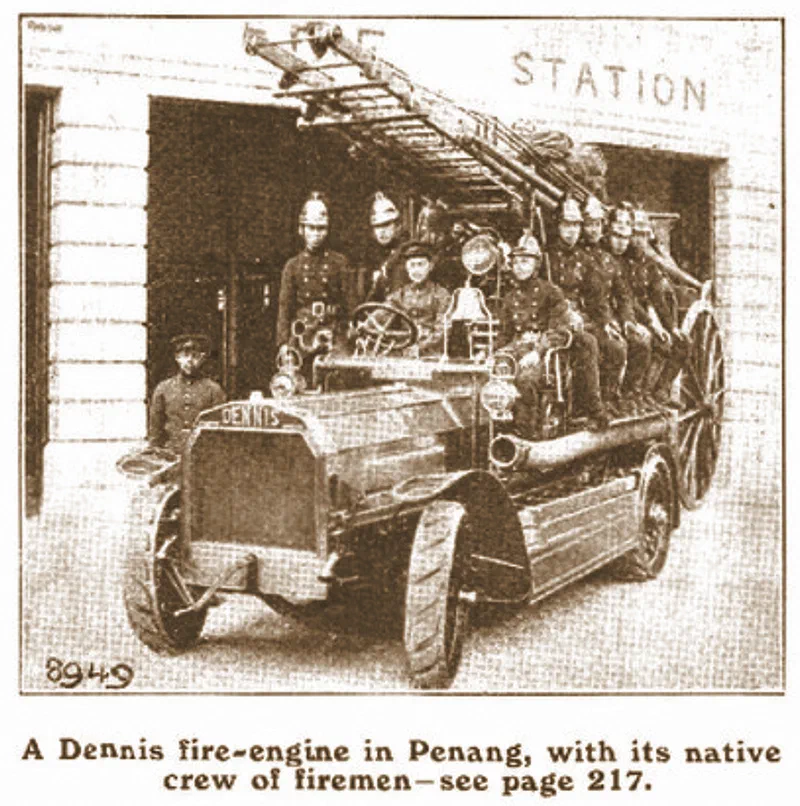
Probably the earliest known photo of Penang’s first motor fire engine and its crew:
“… a Dennis-Gwynne turbine fire-engine owned by the Penang Fire Brigade. It is manned by Chinamen, with the exception of the driver, who is a Malay. Our illustration is reproduced from a photograph that was taken outside the fire station in Penang, and it may be remarked that the excellent training of the men is wholly due to the efforts of Chief Officer Hamilton.”
When this photo was taken, the fire station had just been built three years earlier in 1908.
Source:
Commercial Motor, Vol. 13, No. 323, ‘Fire-Brigade Matters’, 18-May-1911, pg. 217, 227