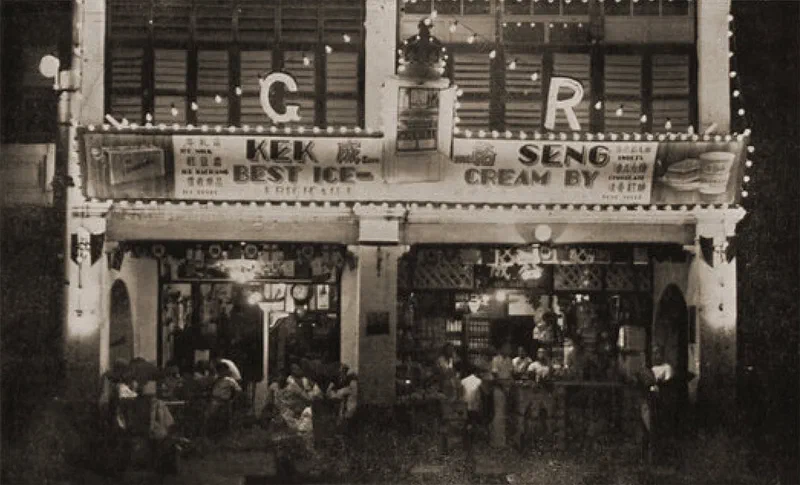
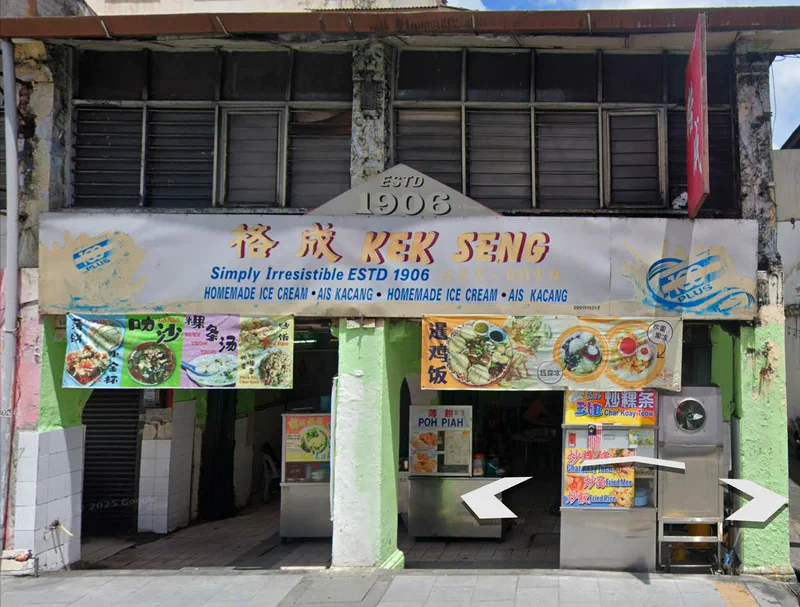
A rare nighttime photograph of Kek Seng (格成, Gé Chéng) – the now 119-year-old “refreshment shop” (or kopitiam) at 382 & 384, Penang Road. Within the shop hangs an old photograph bearing the foundation date – 8 August 1906 – though it is a reproduction of the image shown here.
At the time, the premises were decorated – as were many others across town – to commemorate the coronation of King George VI in 1937. The lighting was provided by Wee Chor Electrical Company of Chulia Street.
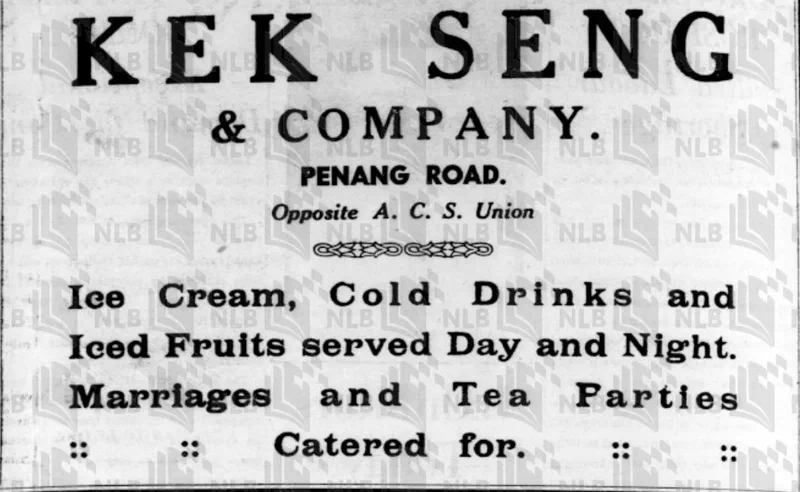
Kek Seng & Co. produced and supplied ice cream to trade fairs and other public events. A report on the Penang Trade Fair in 1936 describes them as “Kek Seng ice-cream makers”.
The caption reads: “The illuminated premises of Kek Seng, the Ice Cream and Refreshment Shop in Penang Road.”
This photograph was featured in a commemorative volume titled ‘A Coronation Souvenir’ – “a permanent record of the share taken by British subjects of H.M. King George VI [and Queen Elizabeth – the Queen Mother] in the Settlement of Penang in the celebrations which marked the Coronation of Their Majesties on 12 May 1937”.
Above the signboard are the letters G and R – alluding to the royal cypher Georgius Rex – Latin for King George.
To this day, the shop remains best known for its ice kacang.
Sources:
Colonial Office (1937), “A Coronation Souvenir, pictorial record of the celebrations in Penang and North Malaya for the 1937 Coronation”, UK National Archives Ref: CO 1069/502-080
Pinang Gazette and Straits Chronicle (1938), “Biggest Trade Fair In North Malaya”, 19 December 1938, p. 1
Pinang Gazette and Straits Chronicle (1936), 7 November 1936, p. 4
Trisha Nanda Gopal (2024), “A little kopitiam’s timeless charm”, The Star, 19 May 2024
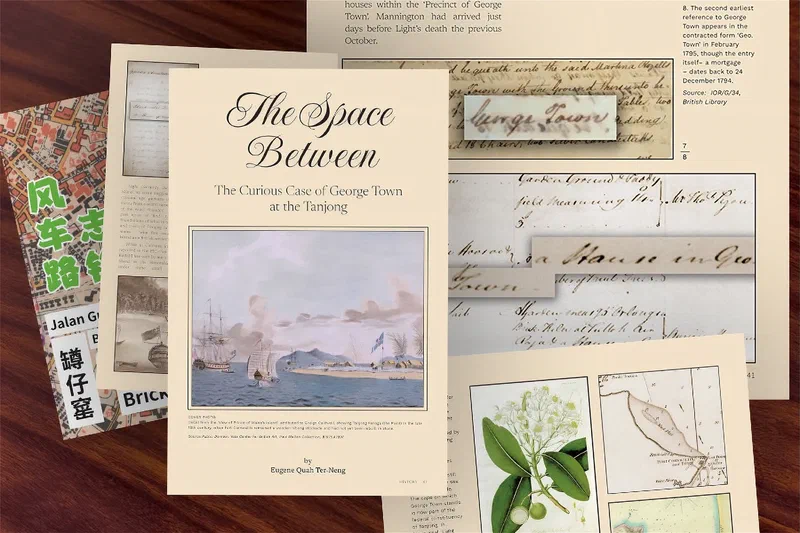
That modest space between “George” and “Town” has sparked surprisingly passionate debate in our local papers for over a century — and for good reason. Beyond spelling, this debate touches on deeper questions of identity, memory, and place.
My friend Zuhairy Fauzy – now Secretary of the Penang Heritage Trust – weighed in on the matter two years ago in The Star, the latest in a long and thoughtful line of orthographic guardians.
Curious, I turned to the East India Company records to see if they could shed some light on this matter. What I found was unexpected: the familiar story of Captain Francis Light naming George Town in 1786 appears to be an assumption — and an incorrect one.
The earliest reference to the name doesn’t appear until October 1794, in Light’s final will, written on his deathbed. The next mention came on Christmas Eve that same year, in reference to a mortgage for a house in “Geo. Town” belonging to a certain Mr. Meer Saib, as recorded by Light’s successor, Philip Mannington.
But here’s what is truly fascinating: for most of the 19th until the latter half of the 20th century, based on a close reading of publications and newspapers of the time, “George Town” was a name confined mostly to officialdom. On the ground, in the kopitiams, wet markets, and tiffin rooms where life actually happened, Europeans usually referred to both the island and town simply as “Penang” (pronounced closer to Pinang than it is today), while locals used the name “Tanjong”.
There’s more to uncover — including rare maps, paintings, and documents previously unseen — in Vol. 49 of Penang City Eye 城视报. Full article: https://online.fliphtml5.com/axcdo/ldgs/#p=37
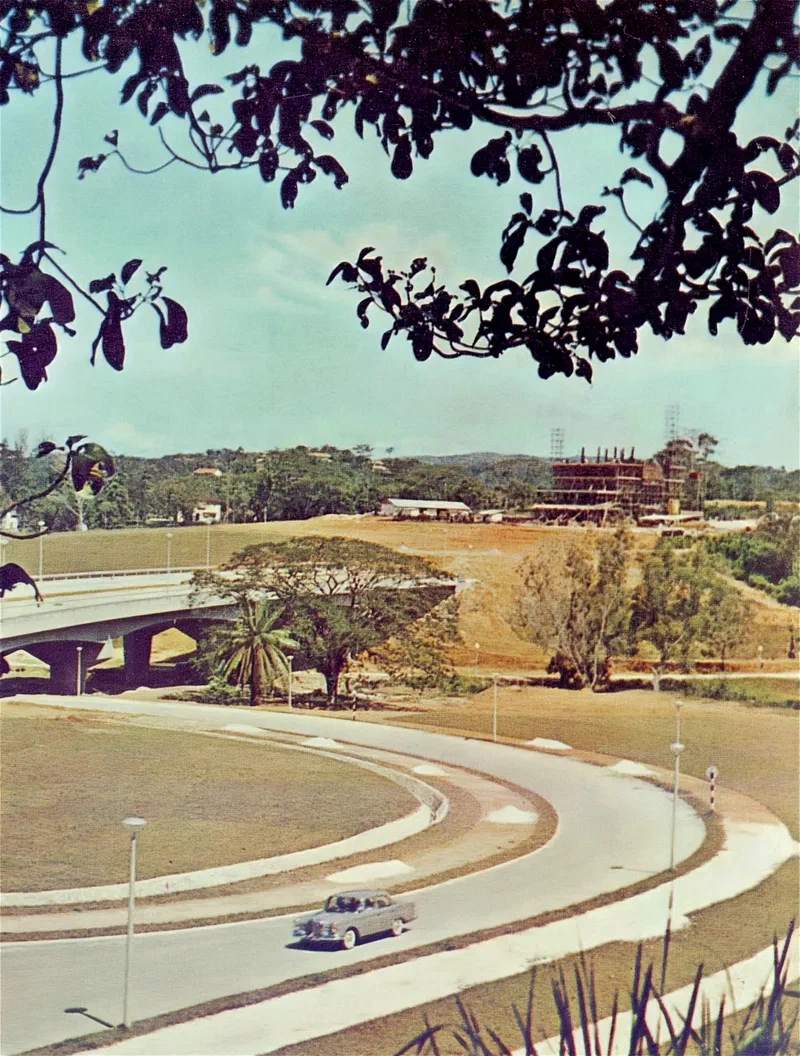
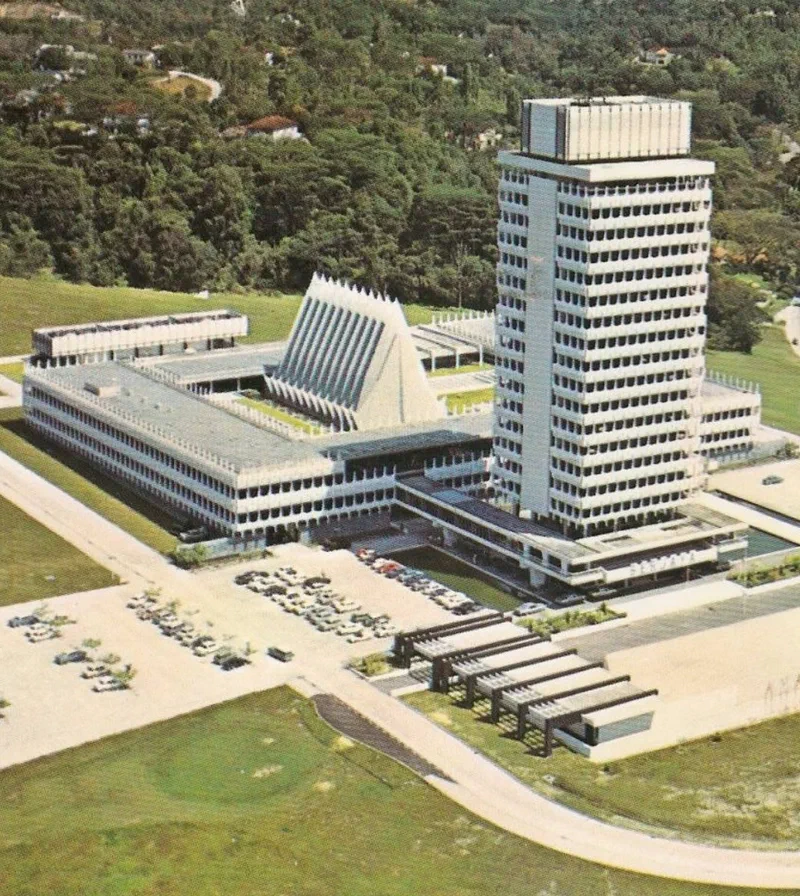
The Malaysian Houses of Parliament (Malay: Bangunan Parlimen Malaysia), designed by architect Sir William Ivor Shipley, was inaugurated on 21 November 1963. The foundation stone was laid on 31 August 1962. This photo shows the building in the early stages of construction.
Left photo: “In the magnificent setting of Kuala Lumpur’s Gardens Malaya’s new Parliament building with the sweep of the Parliament way viaduct symbolises the nation’s democratic tradition.”
Right photo: Completed building (from postcard)
Source: Photo (upscaled) & Text, “Federation of Malaya Year Book 1962”, pg. 30
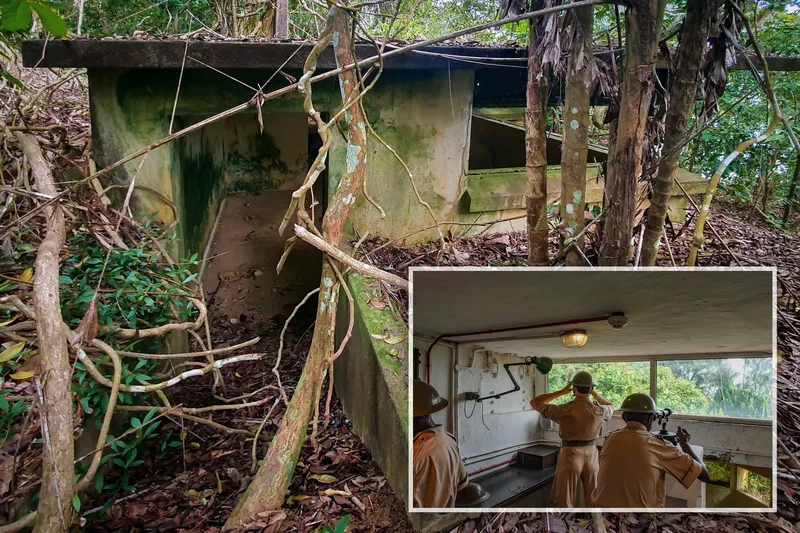
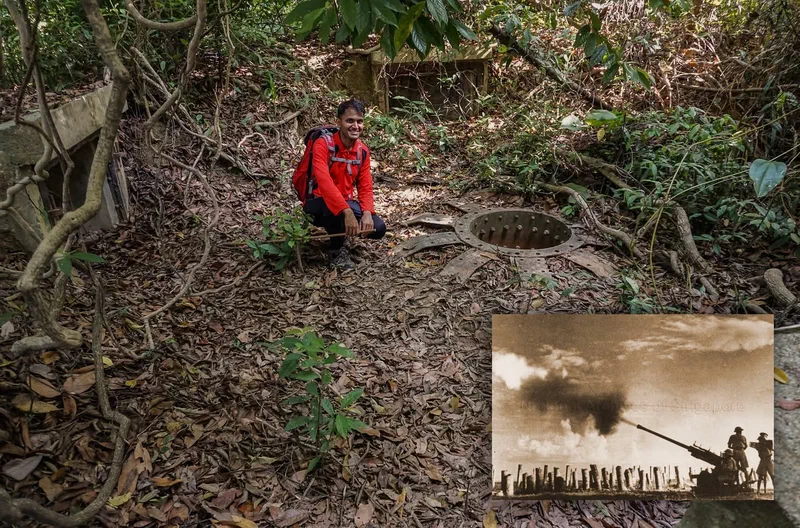
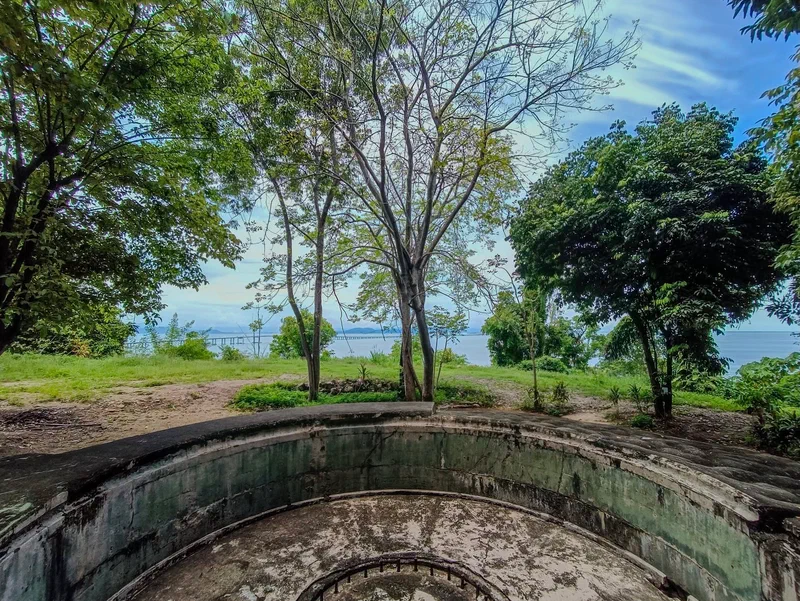
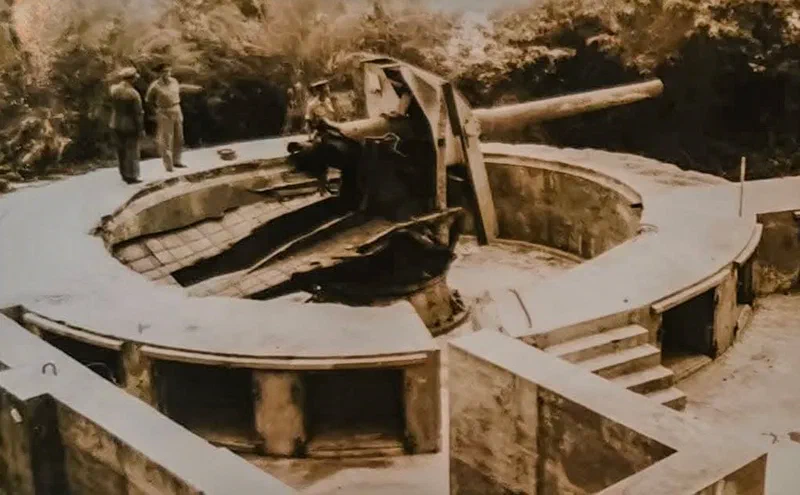
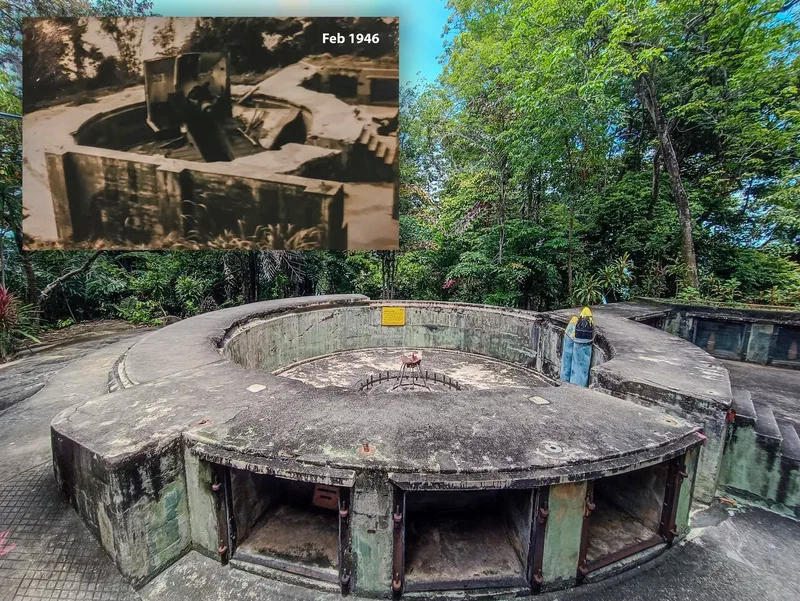
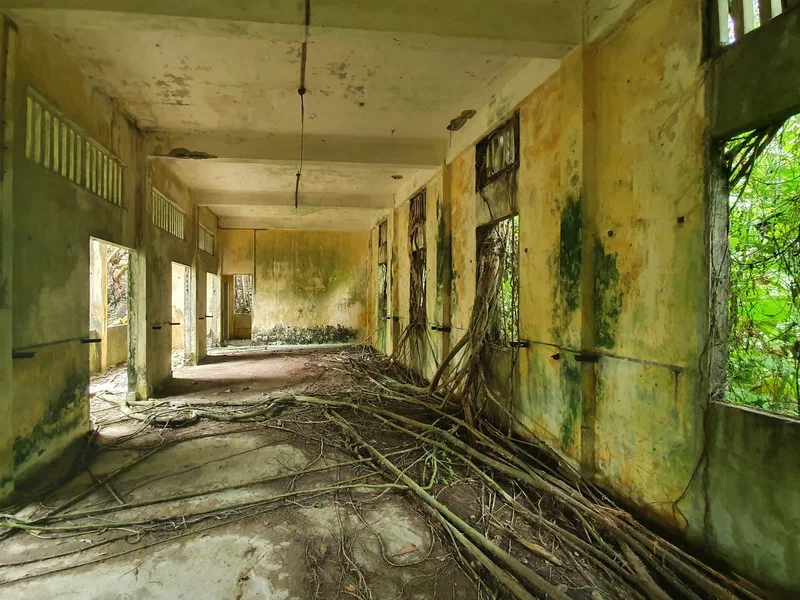
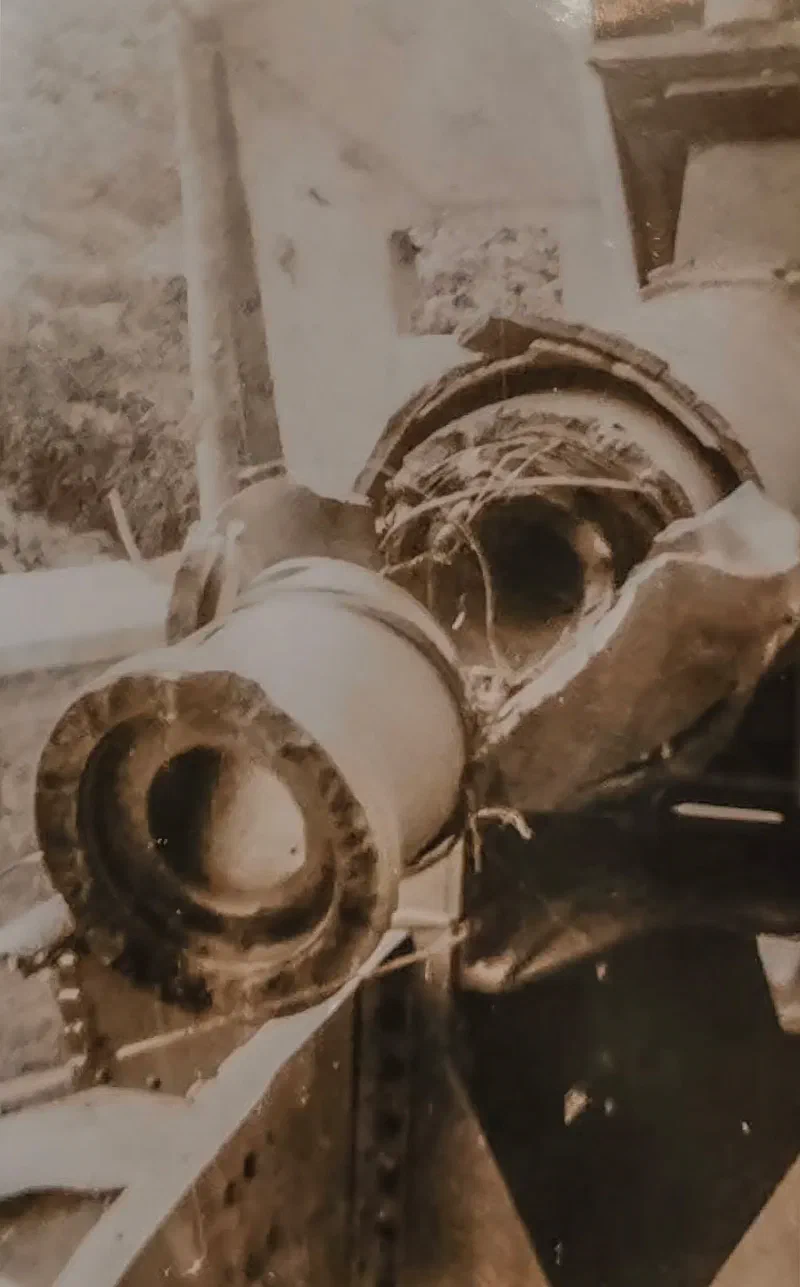
During the night of 16–17 December 1941, as Japanese forces advanced down the peninsula and Penang’s garrison and European population were ordered to evacuate to Singapore, Royal Engineers destroyed Fort Batu Maung’s two 6-inch guns with gelignite – a dynamite-based explosive used for demolition. The fortress commander’s cable to Malaya Command read:
“6-INCH GUNS BATU MAUNG WRECKED BY EXPLODING GELIGNITE IN CHAMBERS. CHARGE BOTH GUNS FIRED SUCCESSFULLY.”
What the terse military prose didn’t convey: the guns had never fired a shot at the enemy. They were destroyed by their own garrison.
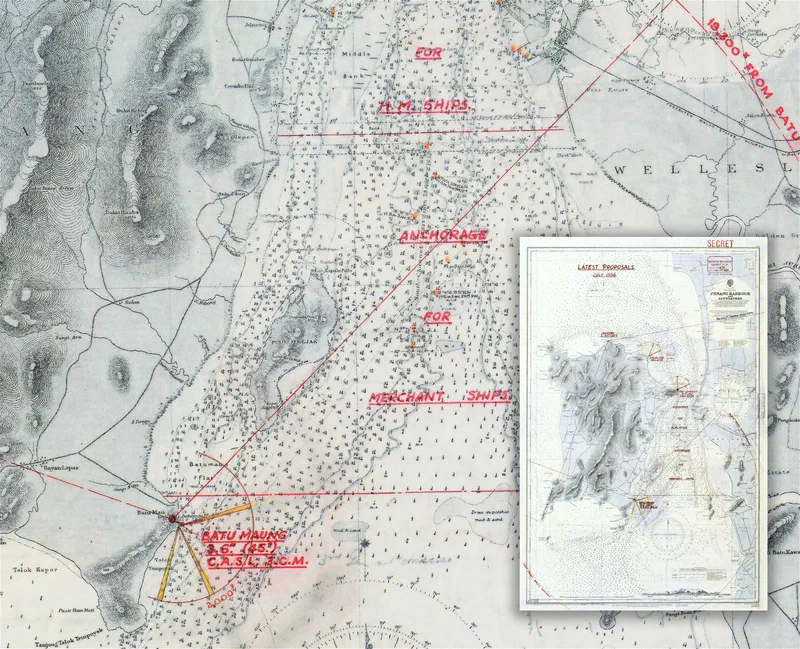
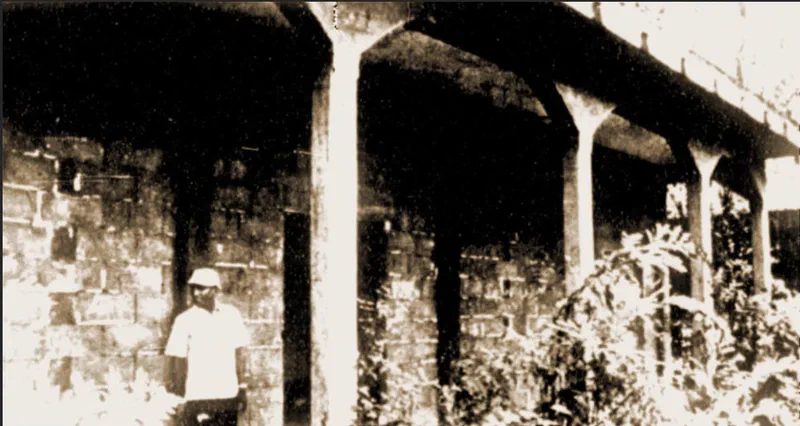
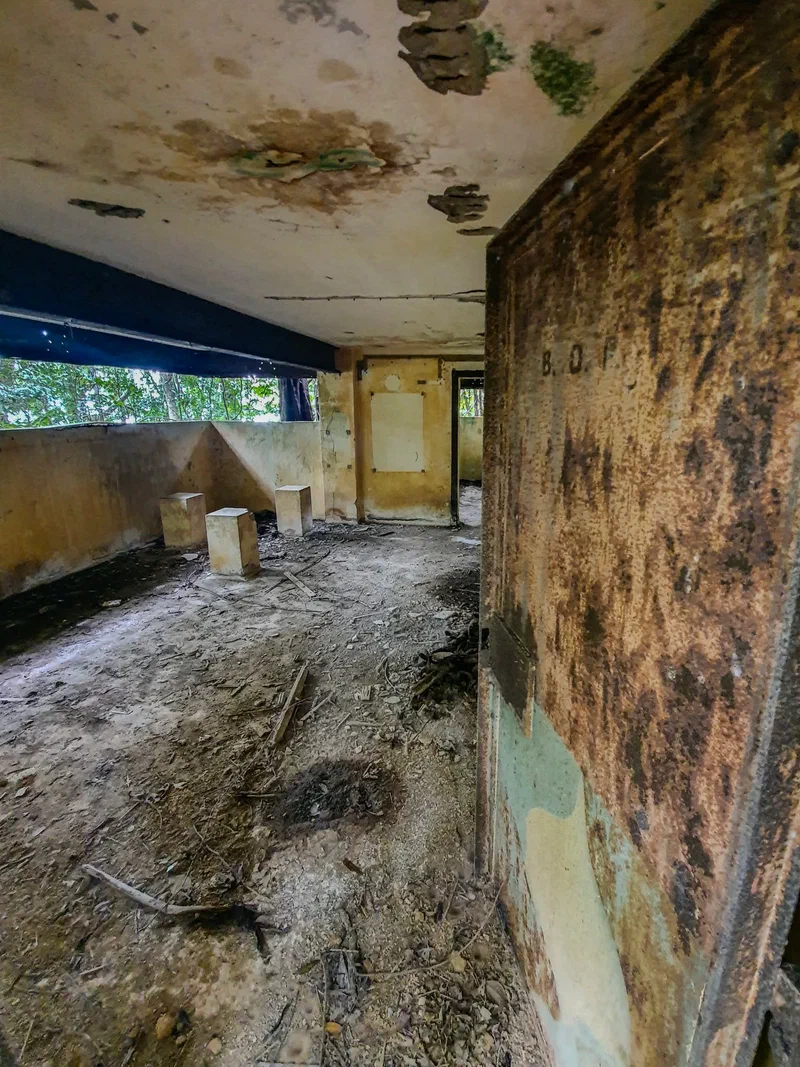
This untold history of Fort Batu Maung draws on declassified War Department telegrams and newly available Singapore Defence Conference reports to trace how the site became a monument to military hubris and the underestimation of the Japanese threat. Today, it’s marketed as the Penang War Museum – a dark tourism attraction and popular paintball site. The “haunted fort” folklore now associated with it obscures the real lessons: a fortress understaffed from the start, promised 40 anti-aircraft guns that never arrived, and abandoned just nine days after war broke out in what was, though often forgotten, the British Empire’s greatest military defeat in WW2 – the loss of Malaya. The valiant defenders of Fortress Penang, as the military called Britain’s strategic northern settlement, were caught in a tactical and strategic collapse not of their making.
Was the fort truly forgotten before its “rediscovery”? And did the Japanese actually use the fort after capturing Penang?