May 2025

Browse the archive
202655
202558
202455
202338
202224

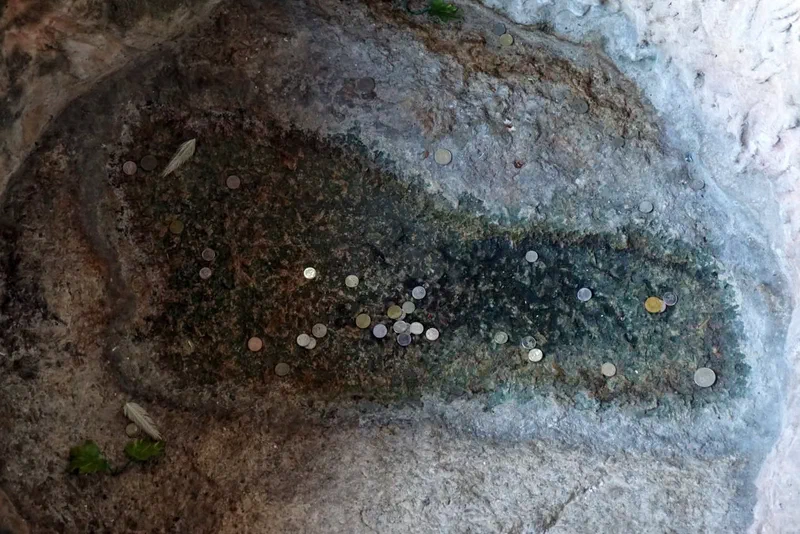
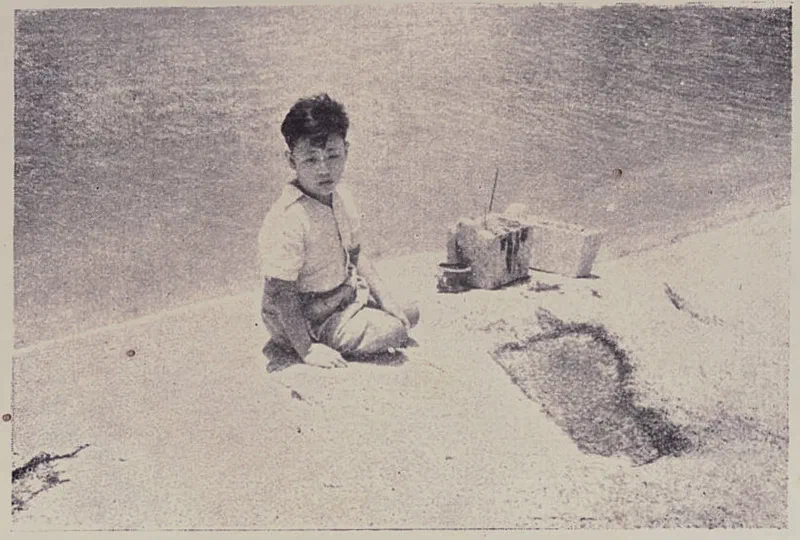
Rare photo of the Sam Poh Kong footprint, Penang (1950)

On the southeastern coast of the island, at Batu Maung, stands a temple built in 1993, dedicated to the folk deity Sam Poh Kong. Shrines like this can be found throughout Southeast Asia’s old port cities. What sets this one apart is a curious relic: a large footprint which the Chinese attribute to Sam Poh Kong himself.

In true Penang fashion, the interpretation varies by community. The Indian community identifies it as the footprint of Lord Hanuman, while Malays connect it to Sang Gedembai, a creature from local folklore.

K.H. Khaw’s annual “Penang Information Guide” of 1950, pg. 57, has this to say, under the heading ‘Footprints on the Sands of Time’:

“The presence of this sacred footprint has invoked deep veneration among the local inhabitants for the Chinese ‘Colombus’ who was the first and earliest Mohammedan [1] Chinese to visit Malaysia. Curiosity has prompted many a visitor including Europeans to frequent this spot. Many go there to make their vows in the hope of winning lotteries, success in business and acquiring good health. Strange as it may seem, most of their vows have been fulfilled and the place is now becoming a popular ‘Mecca.’ … Every traveller to Penang should not miss the opportunity to visit this sacred spot …”

So who was this Chinese ‘Columbus’? [2] Well, he was none other than Admiral Cheng Ho (Zheng He, 鄭和), also known as Ma Sanbao (馬三保), the famed navigator who led seven maritime expeditions to the west between 1405 and 1433. His treasure fleets stopped in Malacca and ventured as far as Mecca and the eastern coast of Africa.

Ironically, though a Muslim, Cheng Ho was venerated by the Chinese diaspora in Southeast Asia for his seafaring and military feats - deified as Sam Poh Kong (Sanbao Gong, 三保公).

While there are no records of Cheng Ho ever setting foot in Penang, the name Bīnláng Yù (梹榔嶼) - “Pinang Islet” - does appear in later Chinese navigation charts based on his voyages.
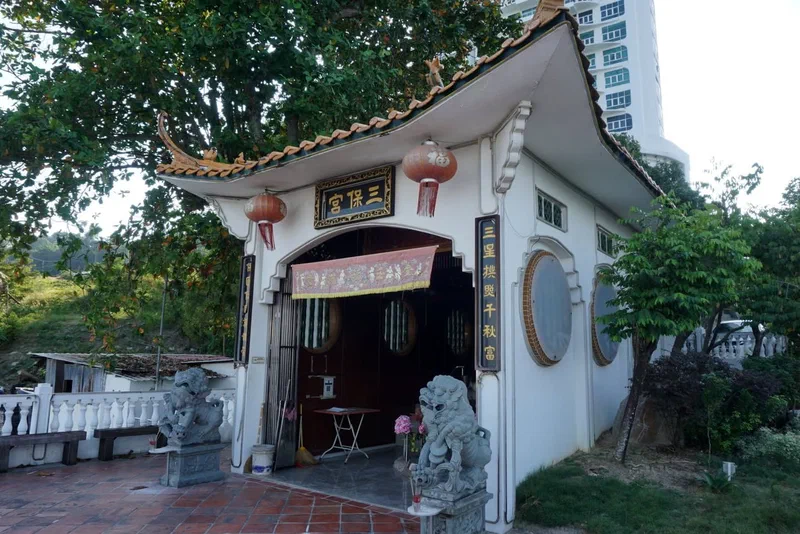
Rare photo of the Sam Poh Kong footprint, Penang (1950) — image 1
Rare photo of the Sam Poh Kong footprint, Penang (1950) — image 2
Rare photo of the Sam Poh Kong footprint, Penang (1950) — image 3

Footnote:
[1] - An archaic term used by Westerners to mean Muslim.
[2] - The Genoese explorer and navigator, Cristoforo Colombo (Christopher Columbus) was born in 1451, long after Cheng Ho’s last voyage.

Photo Credits:
Footprint (1950): K.H. Khaw
Temple & Footprint (2022): Eric Yeoh

https://www.eugenequah.com/blog/rare-photo-of-the-sam-poh-kong-footprint-penang-1950/

Copyright © 2026 Eugene Quah Ter-Neng. All rights reserved.

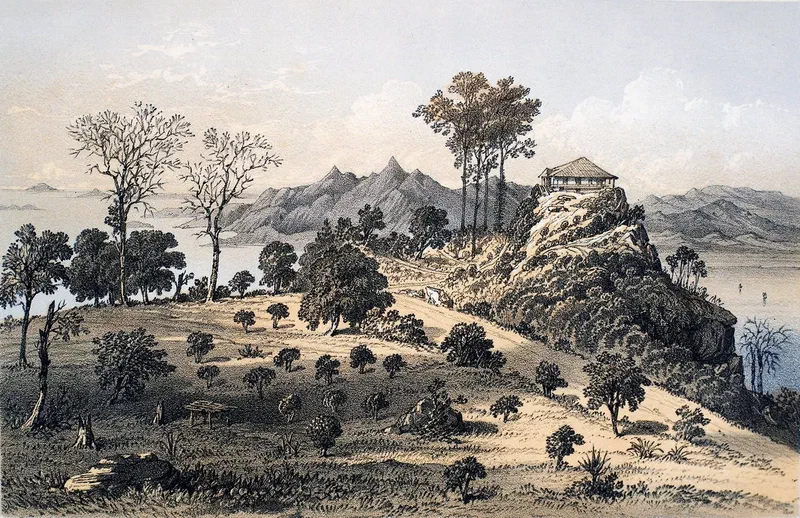
View of the Wolf's Crag, Penang Hill (1852)

In 2015, a UK television drama called “Indian Summers” - set in 1932 during the final years of British Raj rule in India - was shot at the former Crag Hotel at Penang Hill. This magnificent hill bungalow once housed the Uplands School after its days as a hill resort came to an end. The school opened its doors to 52 children in January 1955. Unfortunately, a decade since the filming, the building is now derelict with a large hole in one side of its roof.

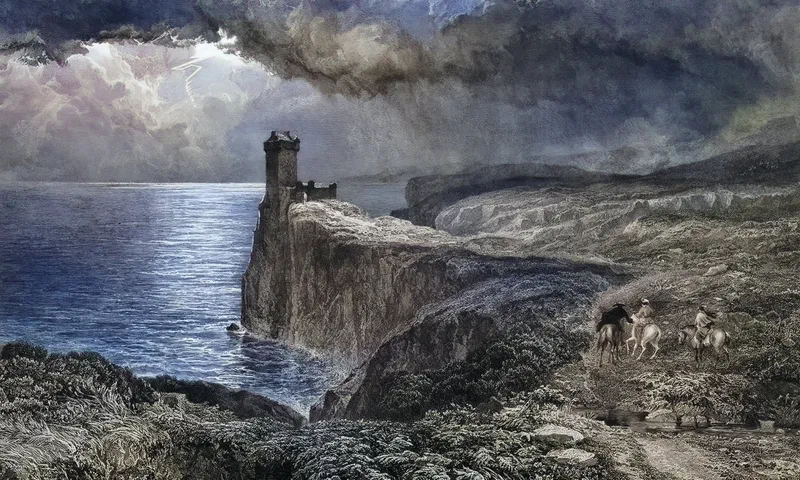
The name Crag, short for the Wolf’s Crag, was likely inspired by the fictional castle on a rocky outcrop in the novel “The Bride of Lammermoor” by Sir Walter Scott. Scott in turn was inspired by the actual Fast Castle in Berwickshire in Scotland. Sir Walter was incidentally a relation of James Scott, Captain Light’s business partner and once Penang’s largest landowner.

This 1852 lithograph of the Crag by William Spreat, based on a painting by Charles Walter Kinloch, is the earliest known view of Mr. Bright’s original bungalow, the Crag. The location of the house on top of a rocky outcrop bears some resemblance to the fictional Wolf’s Crag in Scott’s novel.

Read full article, “A Short History of the Wolf’s Crag” in the Penang City Eye 城视报 Vol. 43:
https://online.fliphtml5.com/axcdo/uazf/#p=34

View of the Wolf’s Crag, Penang Hill (1852) — image 1
View of the Wolf’s Crag, Penang Hill (1852) — image 2

Sources:

  1. De Zieke Reiszinger (1852), “A Sketch of the Penang Hill”, lithograph by William Spreat, after Charles Walter Kinloch.
  2. Engraving by W. Forrest, based on artwork by Samuel Bough. 1875. Public Domain.

https://www.eugenequah.com/blog/view-of-the-wolfs-crag-penang-hill-1852/

Copyright © 2026 Eugene Quah Ter-Neng. All rights reserved.

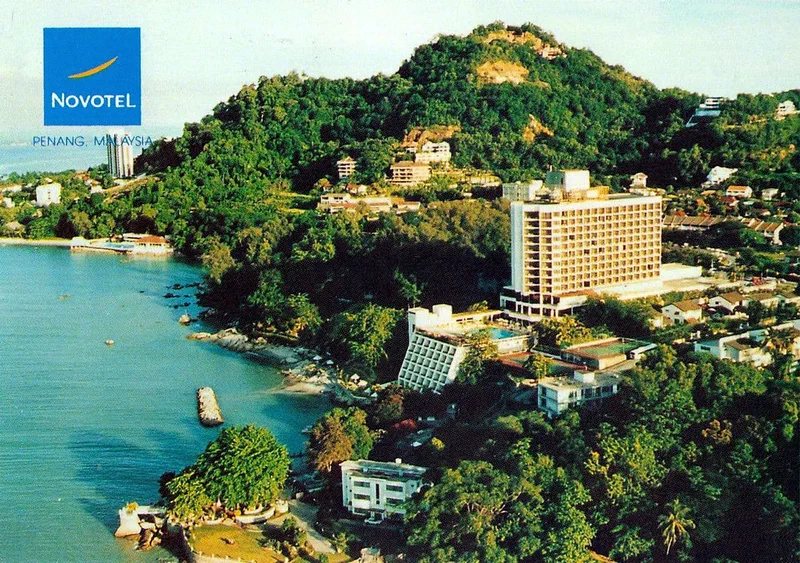
Simply Magnifique! - Novotel arrives in Penang (1990)

So proclaimed an advertisement in the Straits Times on 13 April 1990 announcing the new Novotel Penang at Tanjung Bungah. This promotional photo showcased the towering property, with Mount Erskine - later colloquially known as Pearl Hill - rising in the background.

The hotel’s journey began in December 1983 as Orchard Sun Penang, built by Ganda Holdings Bhd at a cost of M$50 million. It was originally meant to be the Penang Hyatt, a joint venture with the famous American hotel chain, but that plan fell through. The Orchard Sun was marketed as “the island’s first business resort hotel” due to its proximity to George Town as compared to other resorts at Batu Ferringhi. The 19-storey establishment featured Penang’s largest convention ballroom at the time. It was initially managed by Orchard International Hotel Limited. On 30 April 1987, it was rebranded as Orchid Hotel Penang.

Ganda Holdings’ connection to the area extended beyond the hotel. Through its subsidiary, Landbanq Sdn. Bhd., it also owned Pearl Hill Sdn. Bhd., the developer behind Mount Erskine’s Mount Evergreen project - hence the hill’s informal name, Pearl Hill.

However, financial struggles soon forced a change in ownership. In September 1989, the Straits Times reported, “King’s to pay $33m for Orchid Hotel in Penang”, as Singapore’s Hong Leong Group acquired the loss-making hotel for M$46 million through its subsidiary, King’s Hotel Limited. The hotel was managed by a group affiliate, CDL Hotels International, under the Novotel brand.

On 9 June 1998, the Novotel Penang was renamed to Copthorne Orchid Penang; “the first hotel in South-east Asia to carry the Copthorne name.”

Decades later, the COVID-19 pandemic forced the hotel’s closure. In December 2020, CDL sold the property to Ivory Properties Group Bhd for RM 75 million cash. After extensive refurbishment, the hotel reopened in March 2025 as M Social Resort Penang. M Social is one of CDL’s hotel brands.

Simply Magnifique! - Novotel arrives in Penang (1990) — image 1

Sources:

  1. The Straits Times (1998), 10 June 1998, pg. 55
  2. The Straits Times : Weekly Overseas Edition (1989), “King’s to pay $33m for Orchid Hotel in Penang” 9 September 1989, pg. 15
  3. The New Straits Times (1998), “Novotel Penang Renamed to Copthorne Orchid”, pg. 24
  4. The Straits Times (1990), pg. 7
  5. The Straits Times (1987), 30 April 1987, pg. 21
  6. The Straits Times (1987), “Ganda members in hotel dispute”, 29 April 1987, Page 24
  7. The Straits Times, 3 December 1983, pg. 20
  8. The Edge Markets (2020), “Ivory Properties buys hotel in Penang for RM75m cash”, 14 Dec 2020
  9. The Business Times (1983), “Ganda expects to chalk up M$2.8m profit”, 7 April 1983, Page 13

https://www.eugenequah.com/blog/simply-magnifique-novotel-arrives-in-penang-1990/

Copyright © 2026 Eugene Quah Ter-Neng. All rights reserved.

The "Missing" chart of Java and Sumatra - 1598

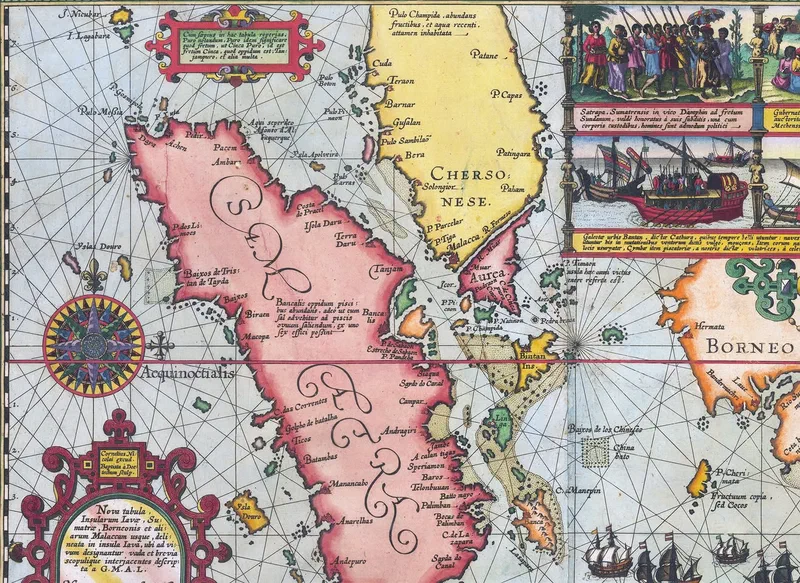
This remarkable maritime chart documents the first Dutch fleet’s voyage - captained by Cornelis de Houtman - through southern Malaya, Sumatra, Java, southern Borneo and islands east of Java to Sumbawa.

The map shows Pulo Pinaon [Pulau Pinang] as well as Cuda [Kedah].

It’s considered the first accurate detailed record of Java’s north coast created by Europeans and features seven scenes depicting the fleet’s adventures, in stunning colour. This expedition and the resulting nautical knowledge gained by the Dutch would contribute to the demise of the Portuguese monopoly of the spice trade in the East Indies in the subsequent decades.

In 1598, Amsterdam publisher Cornelis Claesz released an acclaimed account of this voyage that sold many editions in Dutch and Latin. The book curiously mentioned, at the end of Chapter 19, “Here follows the chart of Java”. However, no copy of any edition included it. The “missing” map was published separately later that same year.

Its creator was Willem Lodewijcksz (an officer on the voyage) who only included a cryptic initial “G.M.A.L.” to hide his identity; it was only deciphered centuries later as “[G]uilielmus [M]. [A]lias [L]odewycksz.”

In one of the cartouches (explanatory box) of the map is the following note in Latin: “Cum sępius in hac tabula reperias Puro notandum, Puro idem significare quod fretum, ut Cinca Puro, id est fretum Cinca, quod oppidum est Tanjampuro, et alia multa.” — As you often find on this map, I think it should be noted that puro means the same as strait, as in Cinca Puro [Singapura], that is, the Strait of Cinca, which is the town of Tanjampuro, and many others.

Lodewycksz seems to have thought, incorrectly, that “Puro” meant “Straits.”

However, he correctly states in another note: “Cum sępius hîc occurrat P, sive Pulo, sciendum, Pulo lingua Malayca insulam significare”—Since ‘P’ or ‘Pulo’ appears frequently here, it should be known that Pulo means ‘island’ in the Malay language.

The “Missing” chart of Java and Sumatra - 1598 — image 1

Source:

  1. Thomas Suarez (2012), “Early Mapping of Southeast Asia”, pg. 180
  2. Latin translations mine.

https://www.eugenequah.com/blog/the-missing-chart-of-java-and-sumatra-1598/

Copyright © 2026 Eugene Quah Ter-Neng. All rights reserved.

A kampung house on Pulau Pangkor

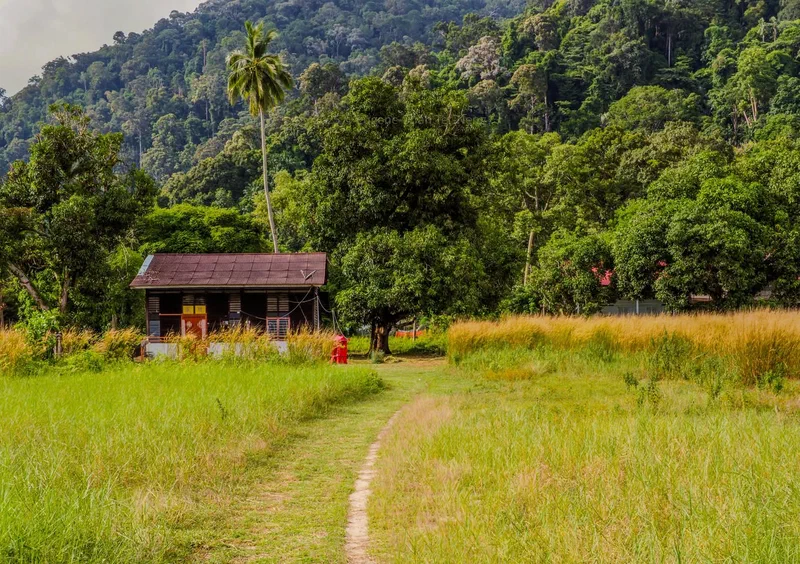
Rustic Chinese kampung house southwest of Pulau Pangkor.

Pangkor was once part of the Dindings Territory of the Straits Settlements. The island itself was first ceded to the East India Company in 1826 by the Sultanate of Perak. It was governed by the British as a dependency of Penang until it was returned to Perak in 1935.

A sparsely populated island for most of its history, it hosted for a time in the late 18th century a small ill-fated Dutch outpost. The isle was not permanently settled until 1866 when a “Kedah Malay named Haji Mahomad Akib conceived the idea of settling at Pangkor, and applied to the [Lieutenant-Governor] of Penang [Col. Henry Stuart Man] for permission to do so”.

After the initial settlement of the island, Chinese fisherfolk, planters and tradesmen - mostly from Penang - started to arrive over the subsequent years, especially after the signing of the Pangkor Treaty of 1874. A linguistic legacy from this colonial period is that the descendants of these Chinese settlers still speak the Penang Hokkien dialect.

A kampung house on Pulau Pangkor — image 1

Source:

“Colonial Penang’s Southern Frontier: Tin, Treaties and the Pangkor Connection”
https://www.penangmonthly.com/colonial-penangs-southern-frontier-tin-treaties-and-the-pangkor-connection/

https://www.eugenequah.com/blog/a-kampung-house-on-pulau-pangkor/

Copyright © 2026 Eugene Quah Ter-Neng. All rights reserved.

Mike Gibby on the layered history of Pulau Jerejak

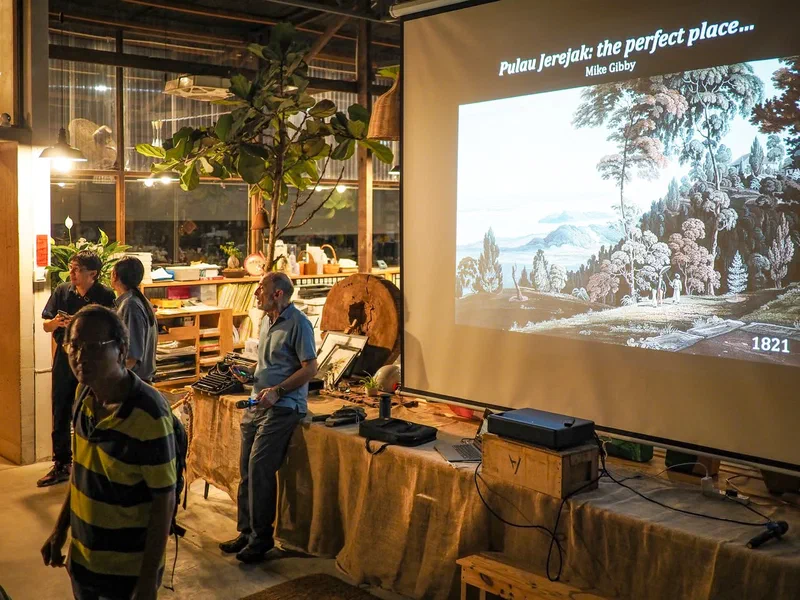
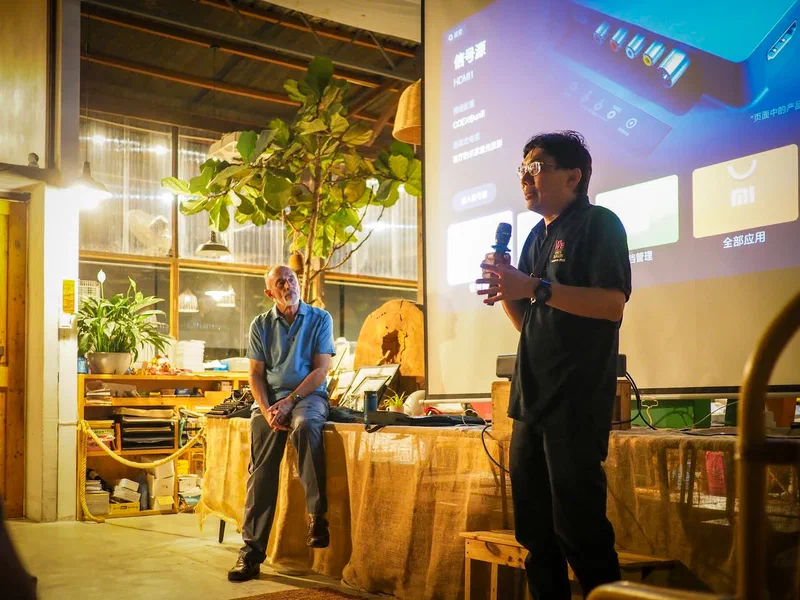
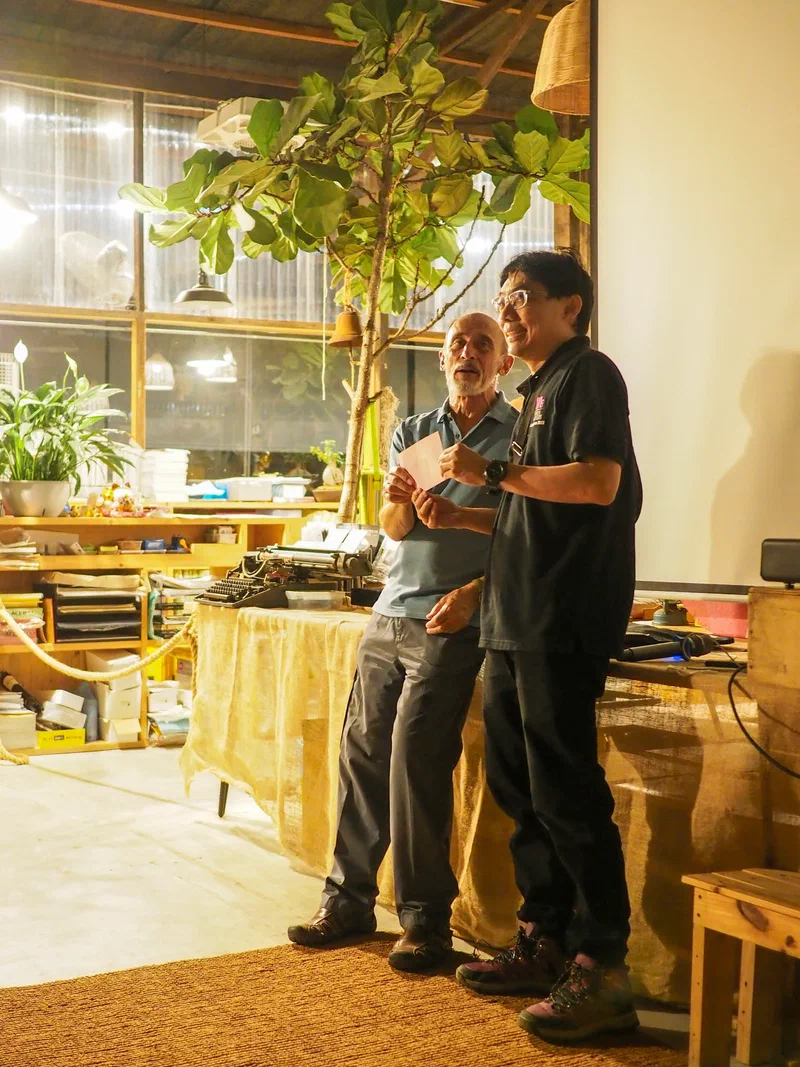
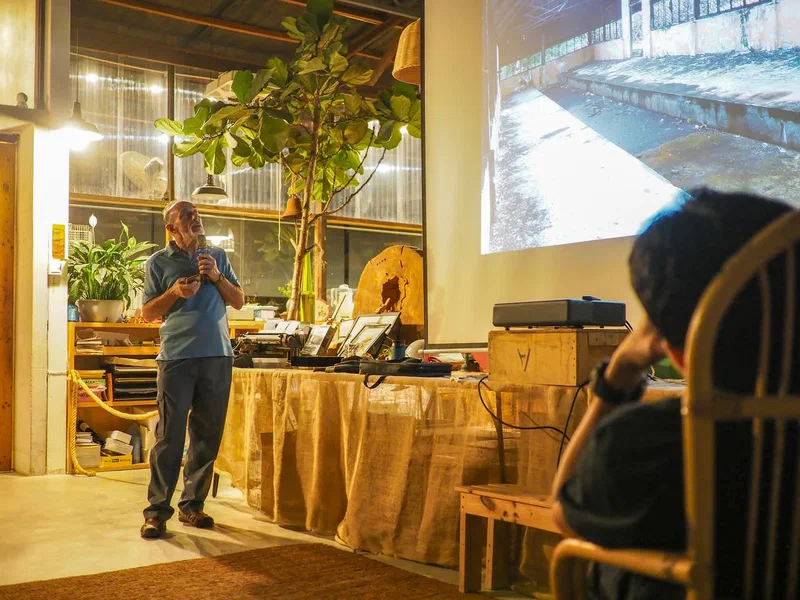
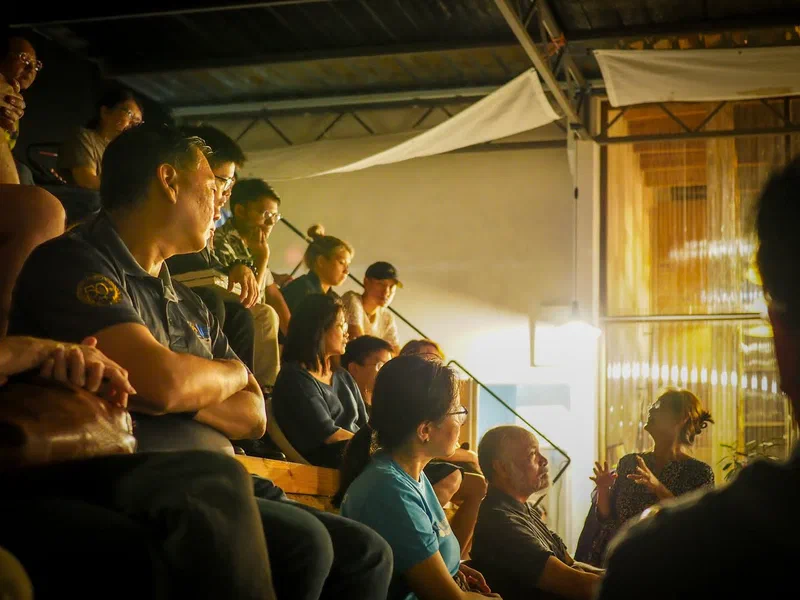
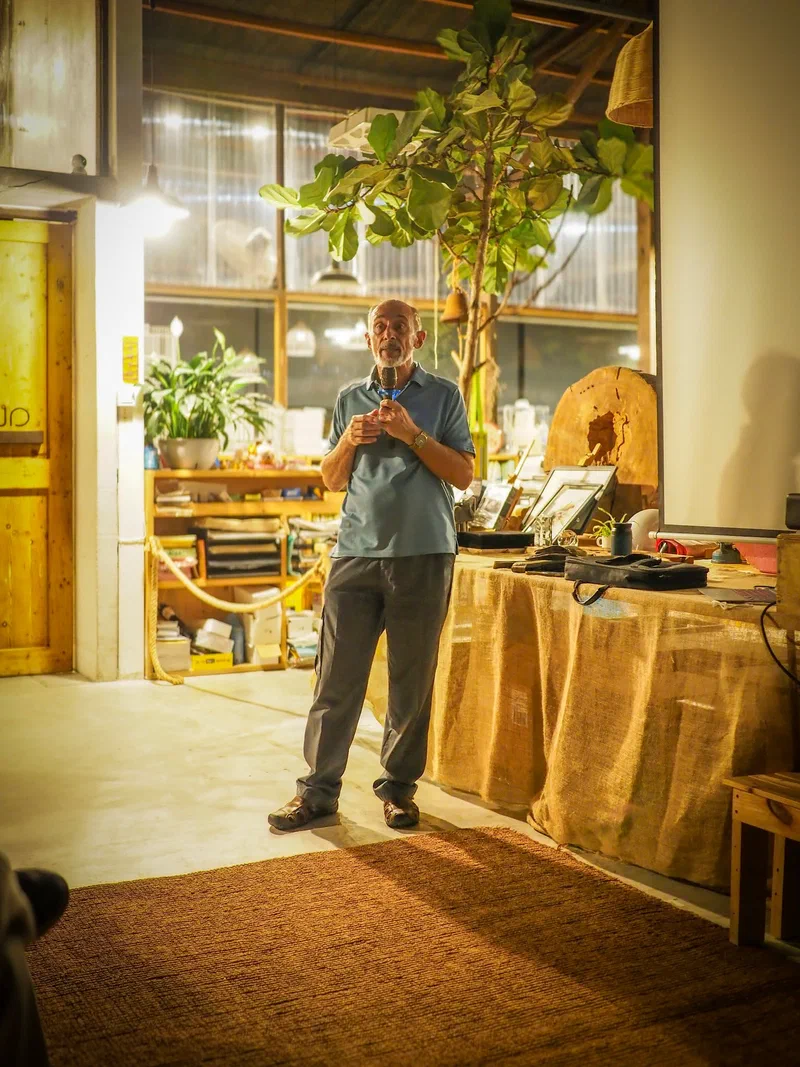
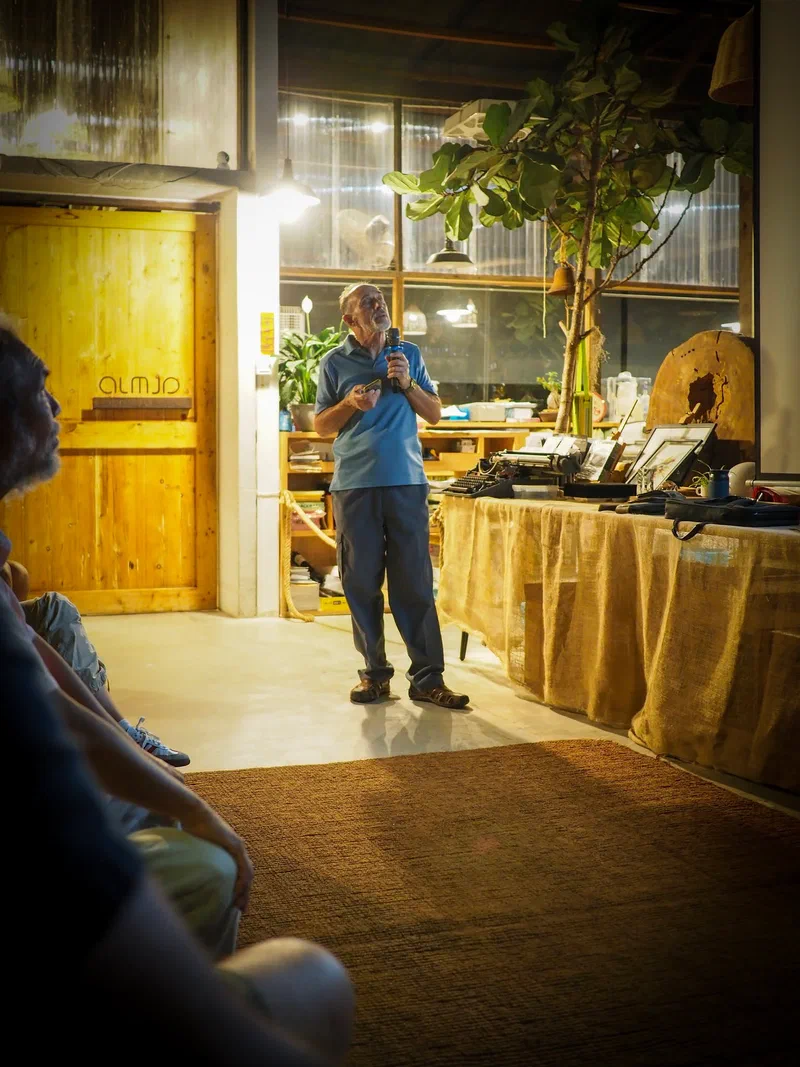
Mike Gibby captivated an attentive and appreciative audience at COEX @ Kilang Besi, diving deep into the fascinating built heritage of Pulau Jerejak. For nearly two hours, he traced the island’s layered history (which he likened to kuih lapis). In his view, this tiny landmass holds the most history per square inch in Malaysia.

Pulau Jerejak has seen it all - once a leper colony, quarantine centre, shipyard, tuberculosis hospital, and later, the infamous prison dubbed “Malaysia’s Alcatraz” and most recently a failed holiday resort, adding yet another chapter to its storied past.

Among the attendees were authors Khoo Salma, Abdur-Razzaq Lubis, Rexy Prakash Chacko and Keith Hockton. Thanks to Orange Ong for organising this insightful session. For some, the experience isn’t over just yet—next up is a hike on the island itself, guided by Ruslan Annuar tomorrow.

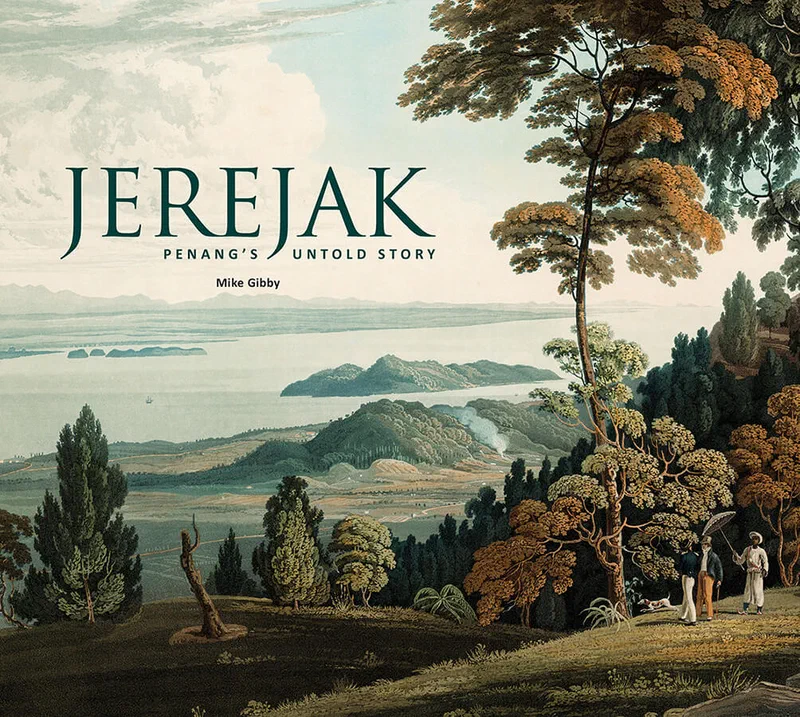
Mike’s excellent book, and still the only comprehensive history of the island, “Jerejak - Penang’s Untold Story” (2018), is available here:
https://arecabooks.com/product/jerejak-penangs-untold-story/

Mike Gibby on the layered history of Pulau Jerejak — image 1
Mike Gibby on the layered history of Pulau Jerejak — image 2
Mike Gibby on the layered history of Pulau Jerejak — image 3
Mike Gibby on the layered history of Pulau Jerejak — image 4
Mike Gibby on the layered history of Pulau Jerejak — image 5
Mike Gibby on the layered history of Pulau Jerejak — image 6
Mike Gibby on the layered history of Pulau Jerejak — image 7
Mike Gibby on the layered history of Pulau Jerejak — image 8

https://www.eugenequah.com/blog/mike-gibby-on-the-layered-history-of-pulau-jerejak/

Copyright © 2026 Eugene Quah Ter-Neng. All rights reserved.

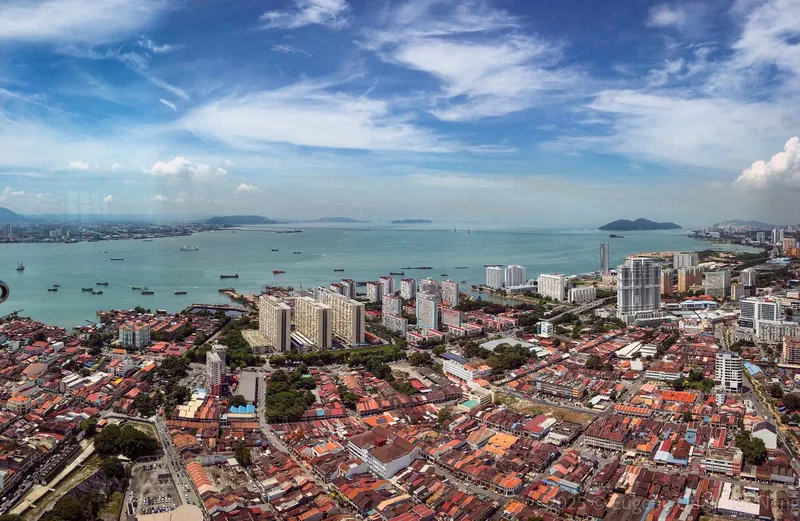
George Town from the top of Komtar

A panoramic view of the eastern side of George Town as seen from the top of the 68-storey Komtar, the tallest building in Penang since 1985. The vista extends down the Penang Strait to the South Channel. Visible on the horizon, moving leftward from the mainland, are Bukit Juru, Bukit Batu Kawan, the elongated Pulau Gedung, and the larger hilly island of Pulau Jerejak with the small tidal islet of Pulau Gazumbo in front of it.

Komtar - an abbreviation for Kompleks Tun Abdul Razak - stands 249 metres tall following an extension in 2015 that added an extra 17.3 metres to its height.

George Town from the top of Komtar — image 1

https://www.eugenequah.com/blog/george-town-from-the-top-of-komtar/

Copyright © 2026 Eugene Quah Ter-Neng. All rights reserved.

View from Penang Hill - August 1846

The Scottish merchant, Charles Andrew Dyce (1816–1853) arrived in Singapore in 1842. He would later paint a few views of Penang in 1846, including this spectacular panorama.

Written on the back of this watercolour painting - now kept in the National University of Singapore’s Museum - is the following note:

“View of Georgetown Penang – Province Wellesley in the Malay Peninsula. The Peak and Hill of Quedah – embracing about 130 miles of coast – from the Convalescent Bungalow, Great Hill, Penang. Height of Flagstaff according to Sir E.Belchers measurement 2600 feet – August 1846.”

View from Penang Hill - August 1846 — image 1

Sources:

  1. Irene Lim (2003), “Sketches in the Straits: nineteenth-century water colours and manuscript of Singapore, Malacca, Penang and Batavia by Charles Dyce”
  2. Photo. S1970-0052-026-0, NUS Museum [Upscaled x3]

https://www.eugenequah.com/blog/view-from-penang-hill-august-1846/

Copyright © 2026 Eugene Quah Ter-Neng. All rights reserved.

The rock of Batu Ferringhi

Explore the batu (rock) of Batu Ferringhi with Rexy Prakash Chacko in his latest Penang Monthly article.

Batu Ferringhi - meaning foreigner rock - has long been used as a landmark by mariners to stop by Pasir Elok nearby to obtain fresh water. The location was described by Manuel Pimentel (1650-1719) - the Portuguese royal cosmographer - in the entry for Pulo Pinaõ (Pulau Pinang) in the 1712 reprint of his navigational treatise first published in 1699. Rexy referred to a later 1762 reprint.

The word farangī (فرنگی) - referring to the Franks, a Germanic tribe - was used by Persian traders to refer to Westerners in general. It was adopted as ferringhi into Malay (and as farang in Thai) either directly or through Hindi-Urdu फ़िरंगी (farangī). Captain Thomas Forrest, who surveyed the coast of Penang in 1784, first recorded the name and correctly suggested it referred to the Portuguese in a report to the Governor-General of India, Warren Hastings.

https://www.penangmonthly.com/when-the-waters-recede-walking-to-batu-ferringhi-isle/

https://www.eugenequah.com/blog/the-rock-of-batu-ferringhi/

Copyright © 2026 Eugene Quah Ter-Neng. All rights reserved.

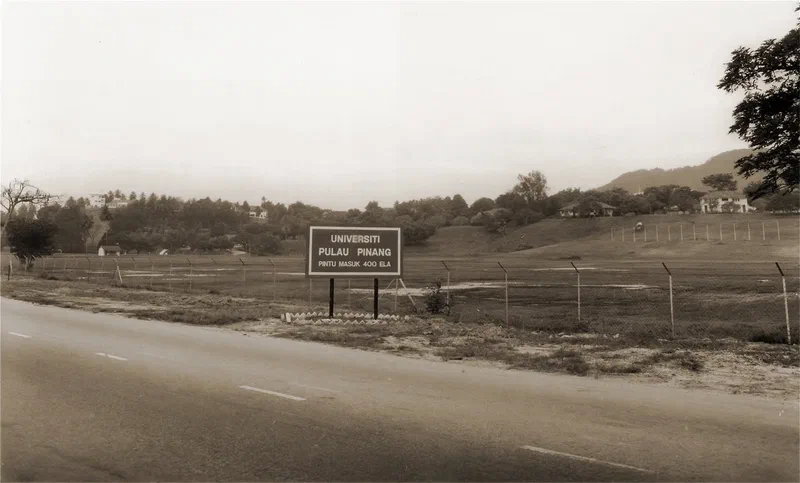
Beginnings of the University of Penang

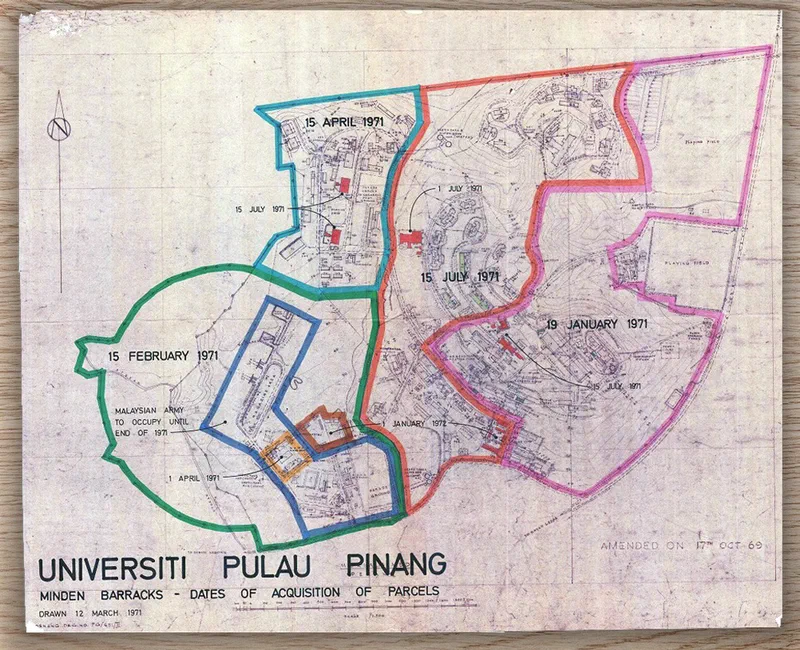
Universiti Sains Malaysia began its journey as the University of Penang (Universiti Pulau Pinang) in June 1969, initially operating from temporary facilities at the Malayan Teachers College.

Earlier on 3 May 1969, Chief Minister Wong Pow Nee had received two $100,000 cheques. “These are donations from the Ban Hin Lee Bank and Yeap Brothers Sendirian Berhad”, explained Wong. The contributions “were partial contributions for an auditorium in the university in memory of the late Towkay Yeap Chor Ee”.

“It will be recalled that some time back Dato Yeap Hock Hoe’s daughter handed to Tengku Abdul Rahman in London a cheque for $100,000 for the University of Penang. Miss Yeap Informed the Tengku then that her father would be donating $1 million to the Penang university”, said the Chief Minister in his speech.

In early June 1967, it was reported “Tengku Abdul Rahman wants the foundation stone of the $25 million Penang University College to be laid during the 10th anniversary celebrations of Merdeka in August … the Prime Minister said the Cabinet approved the spending of the $25 million from the $150 million Japanese loan for the building and running of the college”.

The Prime Minister, however, noted that “here was still one snag in the ways” of spending the approved amount as the loan was promised “in the ‘Aid-to-Malaysia Club’ is not in hard currency … [but] in the form of materials for our development projects”. The loan was supposed to be part of a war reparations agreement signed later on 21 September that year; it is unclear if the plan was followed through.

In February 1971, The Straits Times reported:

“The University of Penang, now ‘squatting’ on borrowed premises at the Malayan Teachers College, will move soon into its new ‘permanent home’ at Minden Barracks, Glugor. Vice Chancellor Professor Hamzah Sendut announced today that the Malaysian Government had confirmed its offer of the barracks to the university.”

This historic move was completed on June 1, 1971. The press noted that the former British military barracks would serve a noble new purpose. As Vice-Chancellor Prof. Hamzah Sendut eloquently stated:

“This is the battle of the human mind which will have a lasting effect on Malaysian society.”

The institution was officially renamed Universiti Sains Malaysia on Saturday, April 22, 1972.

Beginnings of the University of Penang — image 1
Beginnings of the University of Penang — image 2

Sources:

  1. Photos - Perpustakaan Hamzah Sendut, USM
  2. The Straits Times (1971), “University of Penang to move into Minden Barracks”, 14 February 1971, Page 10
  3. The Straits Times (1971), “Penang varsity moves into new site at Minden Barracks”, 2 June 1971, Page 9
  4. The Straits Times (1972), “Now It’s Universiti Sains Malaysia”, 23 April 1972, Page 8
  5. The Straits Times (1969), “$200,000 gift for varsity in Penang”, 4 May 1969, Page 3
  6. The Straits Times (1967), “Penang college: Foundation stone day in August”, 9 June 1967, Page 5

https://www.eugenequah.com/blog/beginnings-of-the-university-of-penang/

Copyright © 2026 Eugene Quah Ter-Neng. All rights reserved.