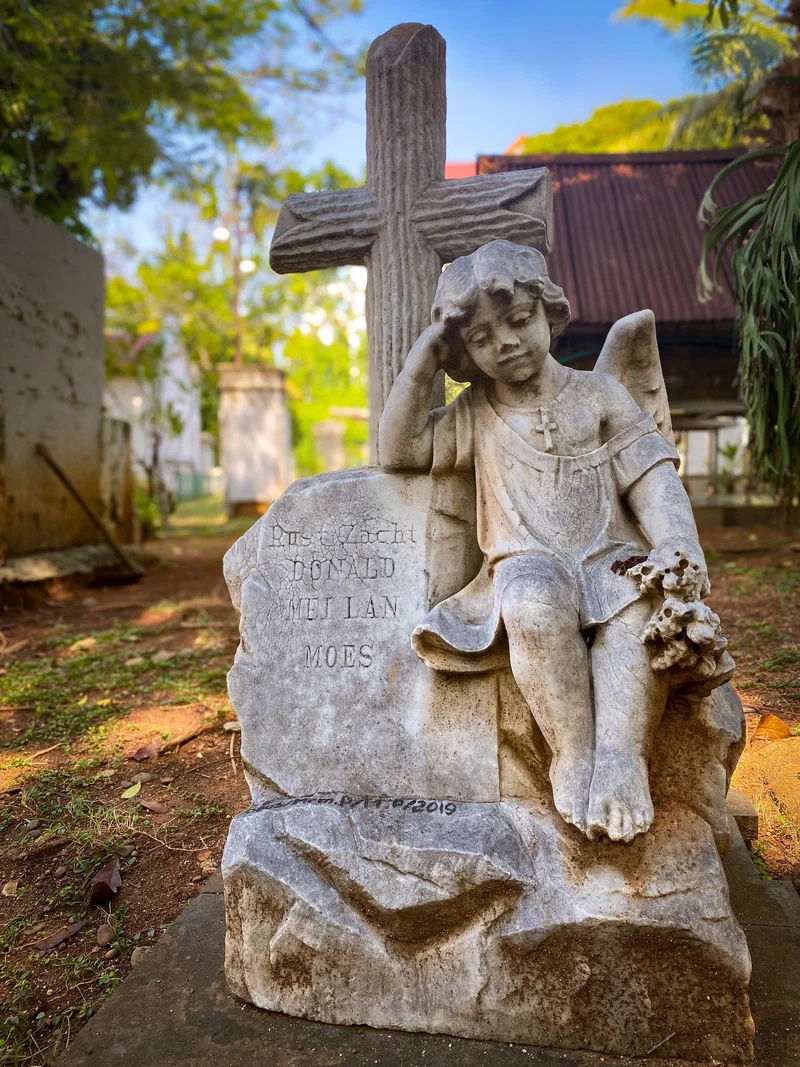
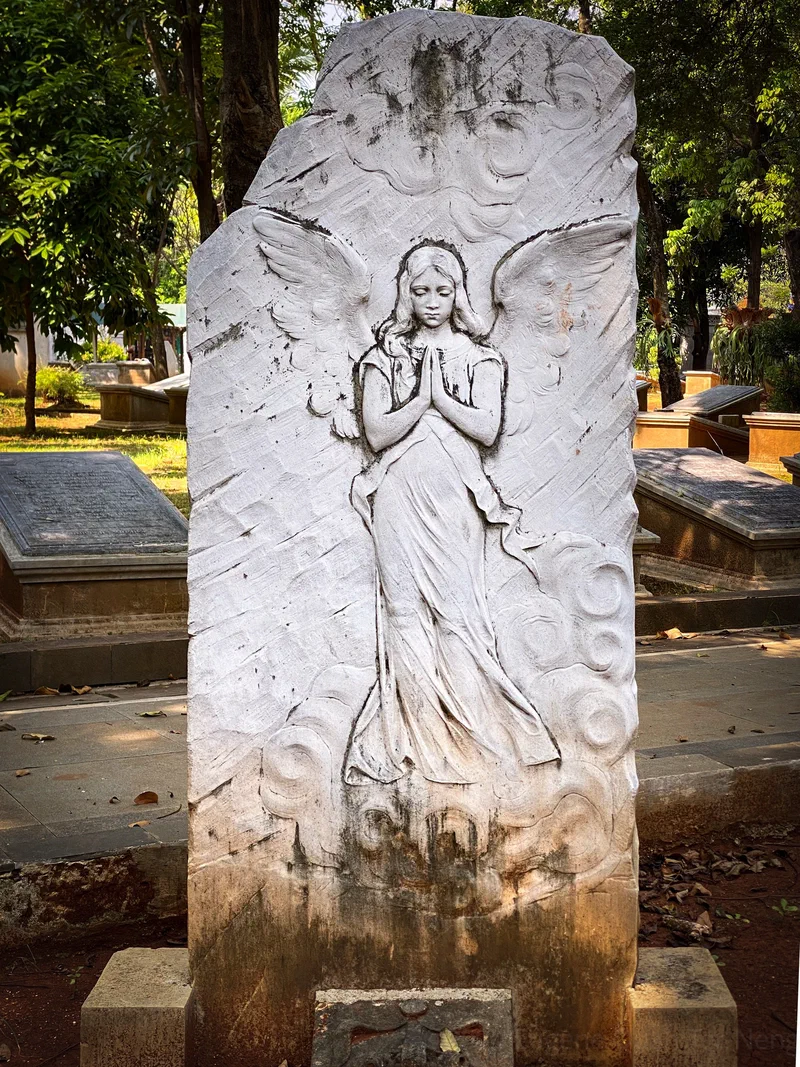
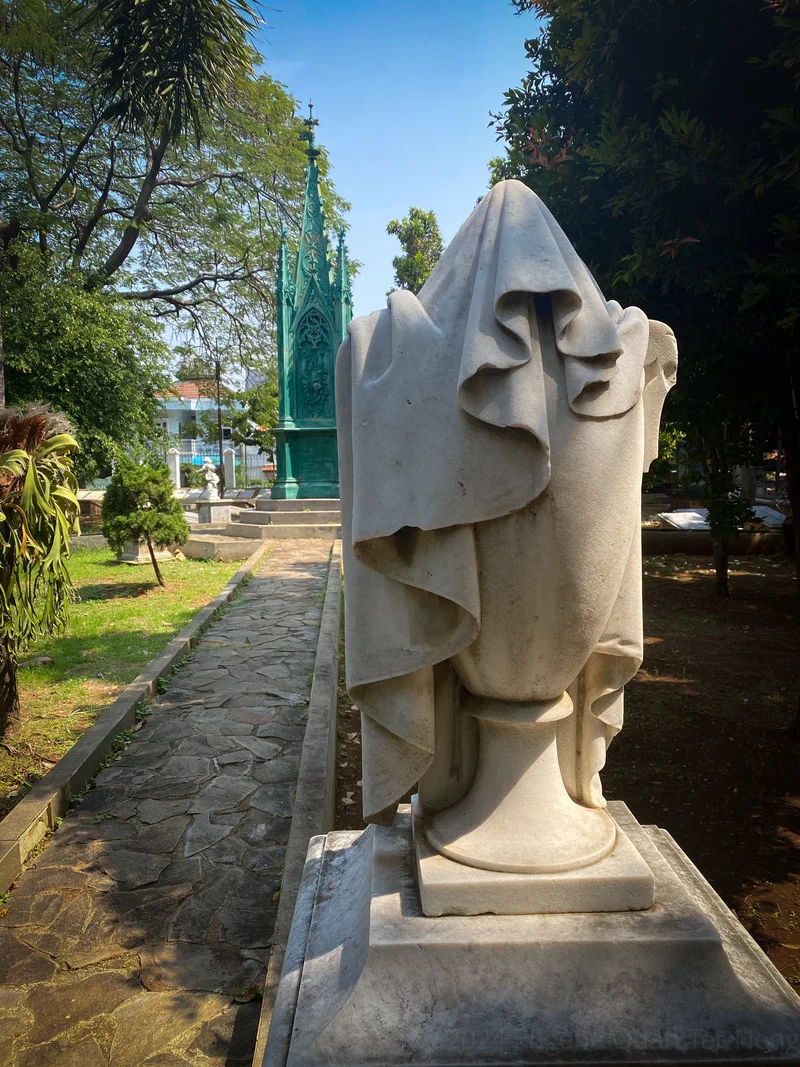
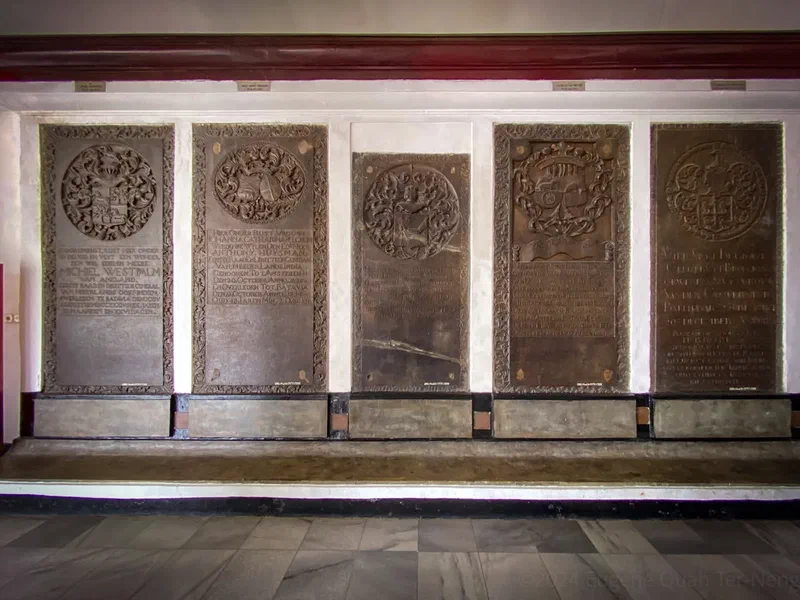
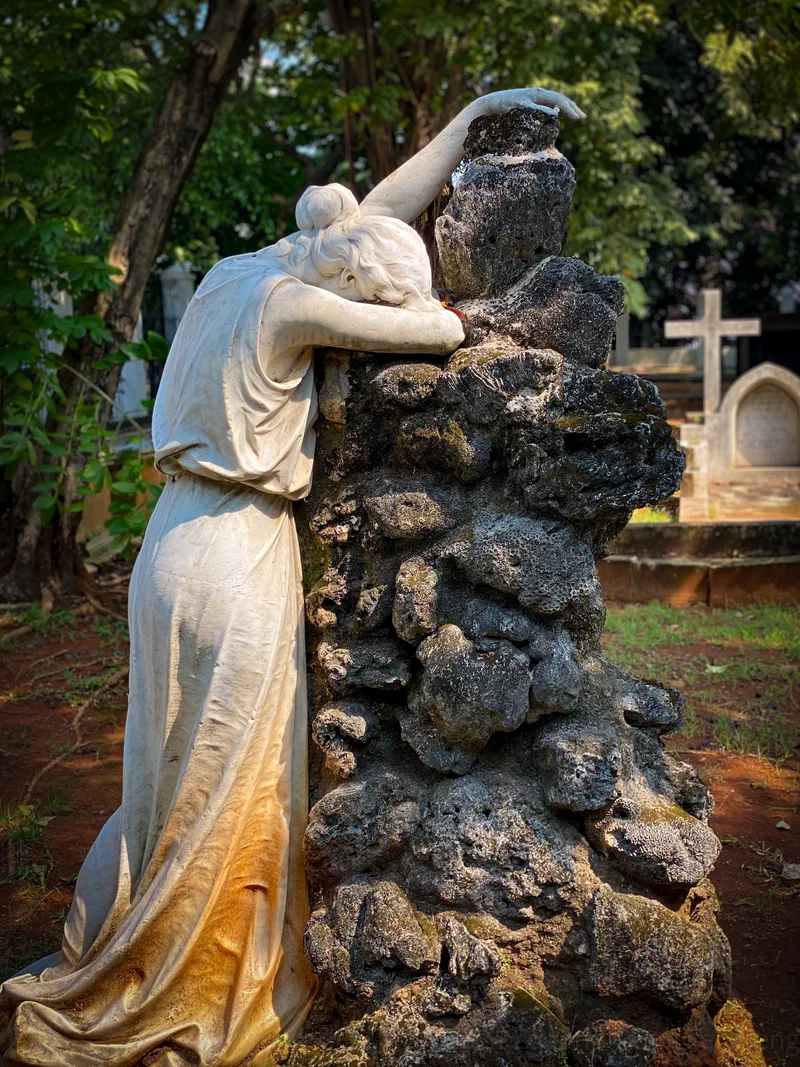
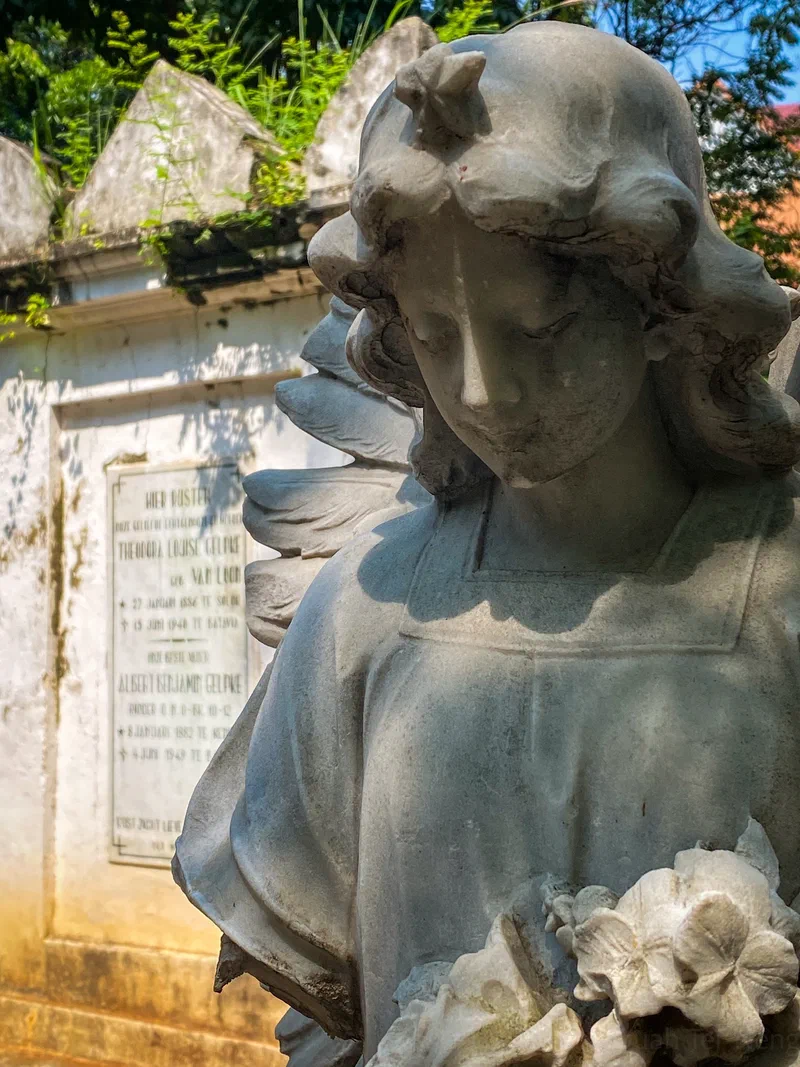
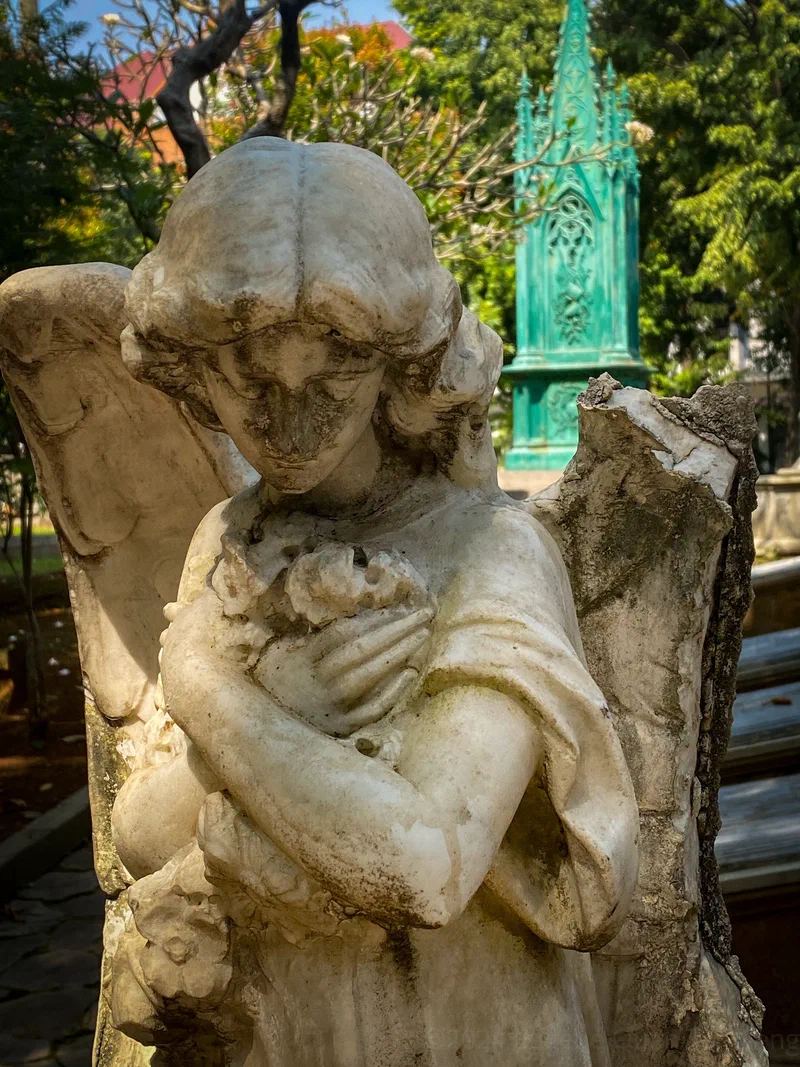
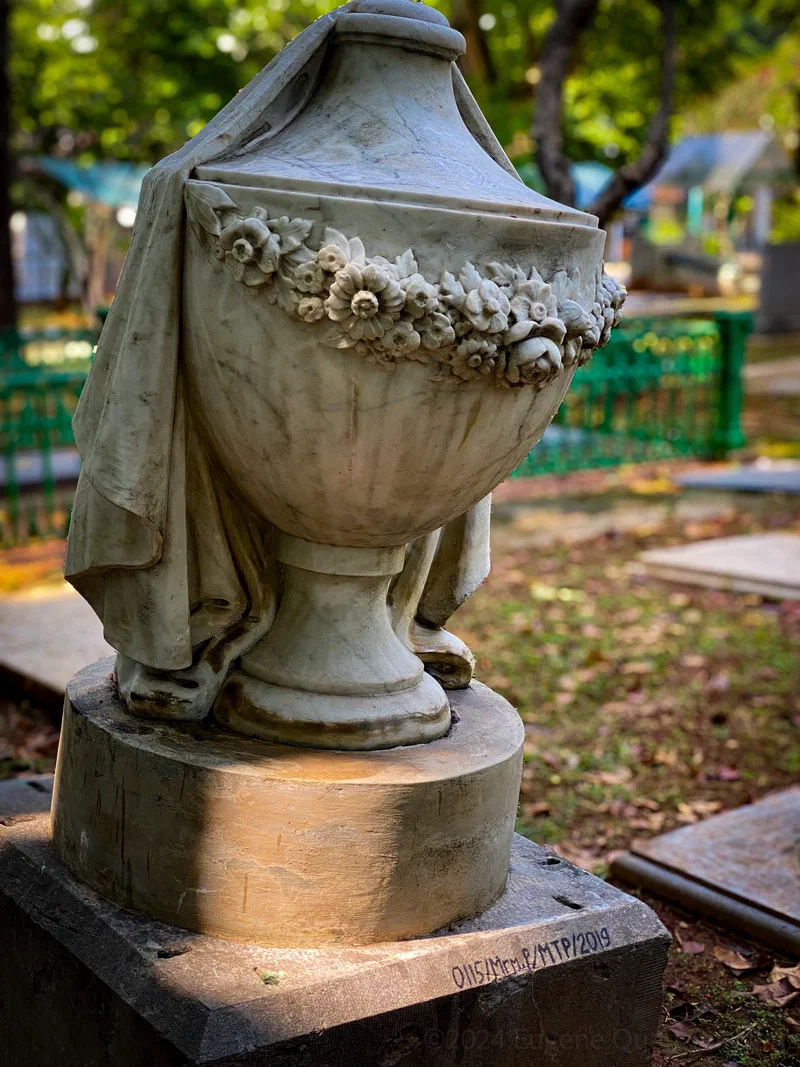
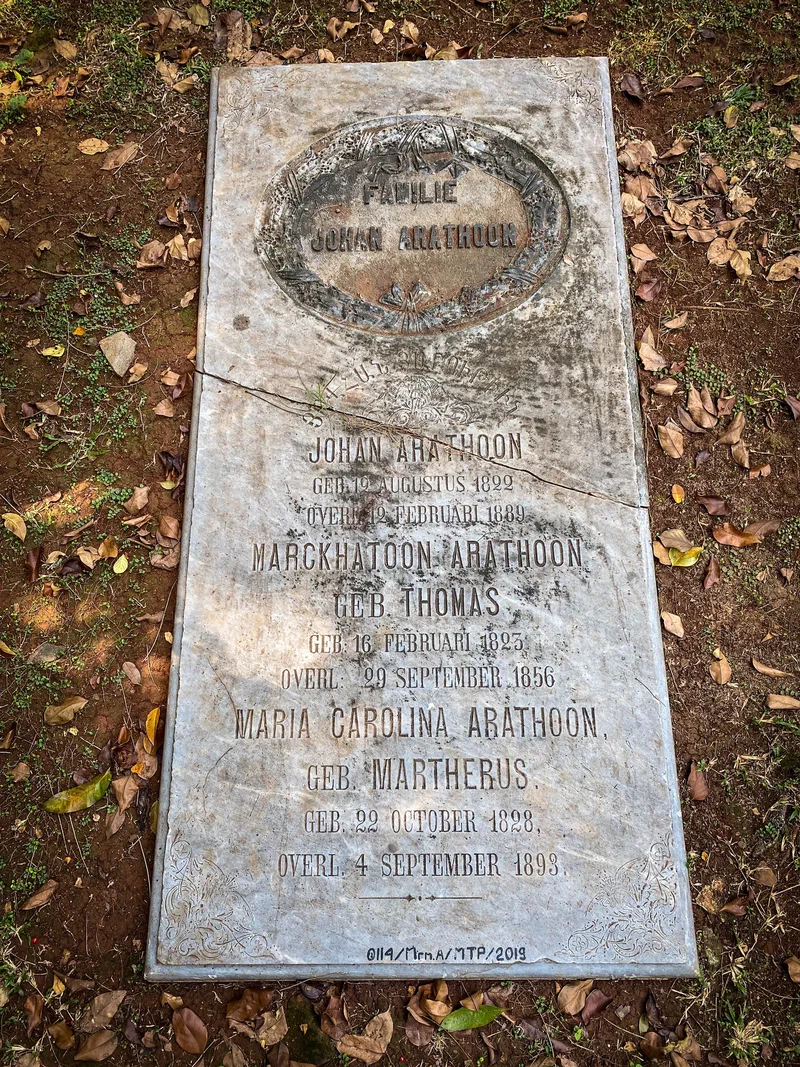
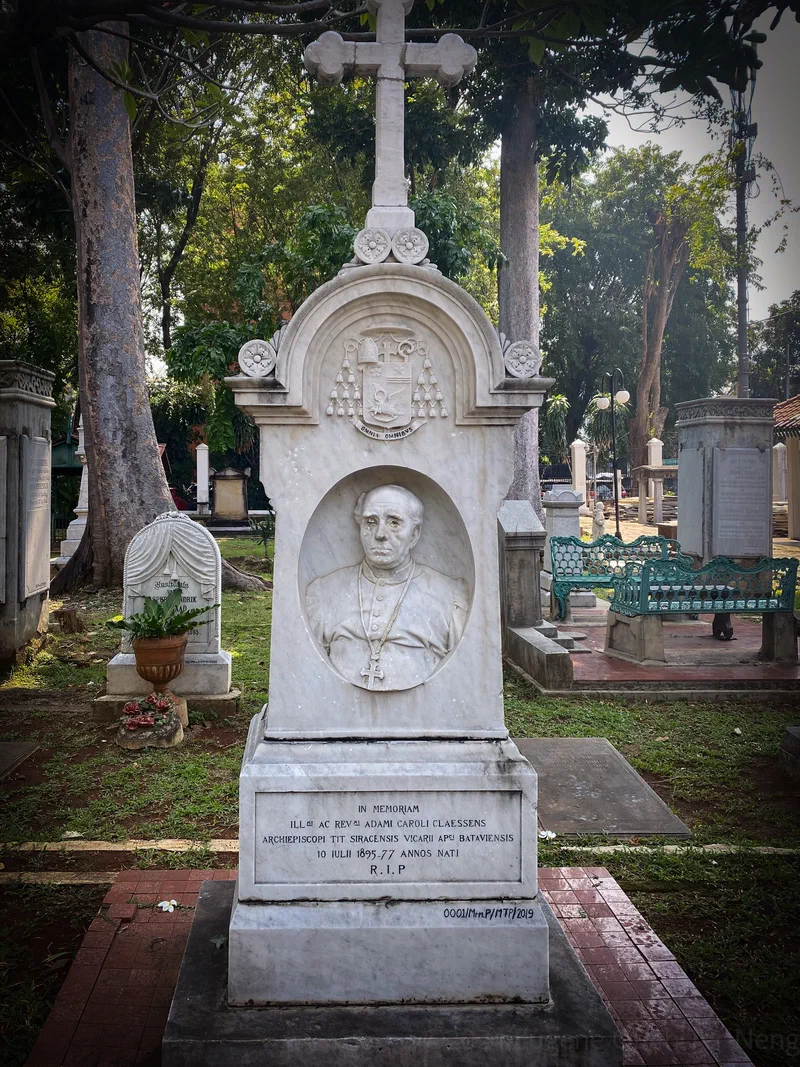
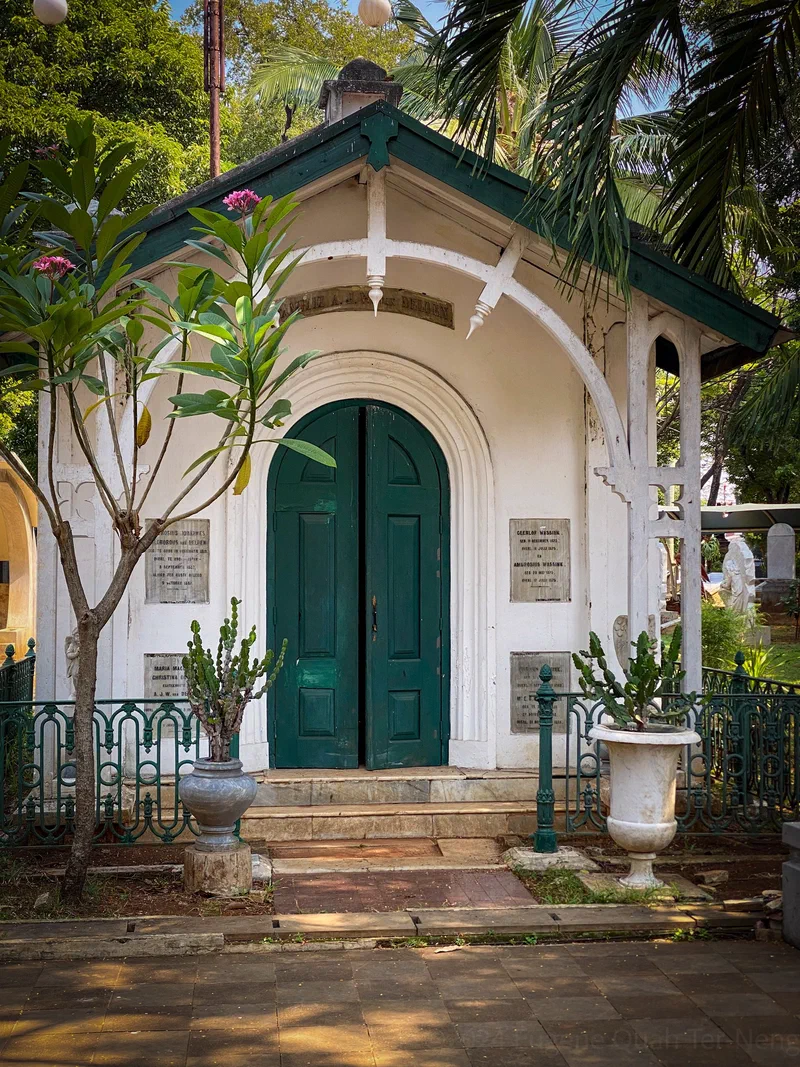
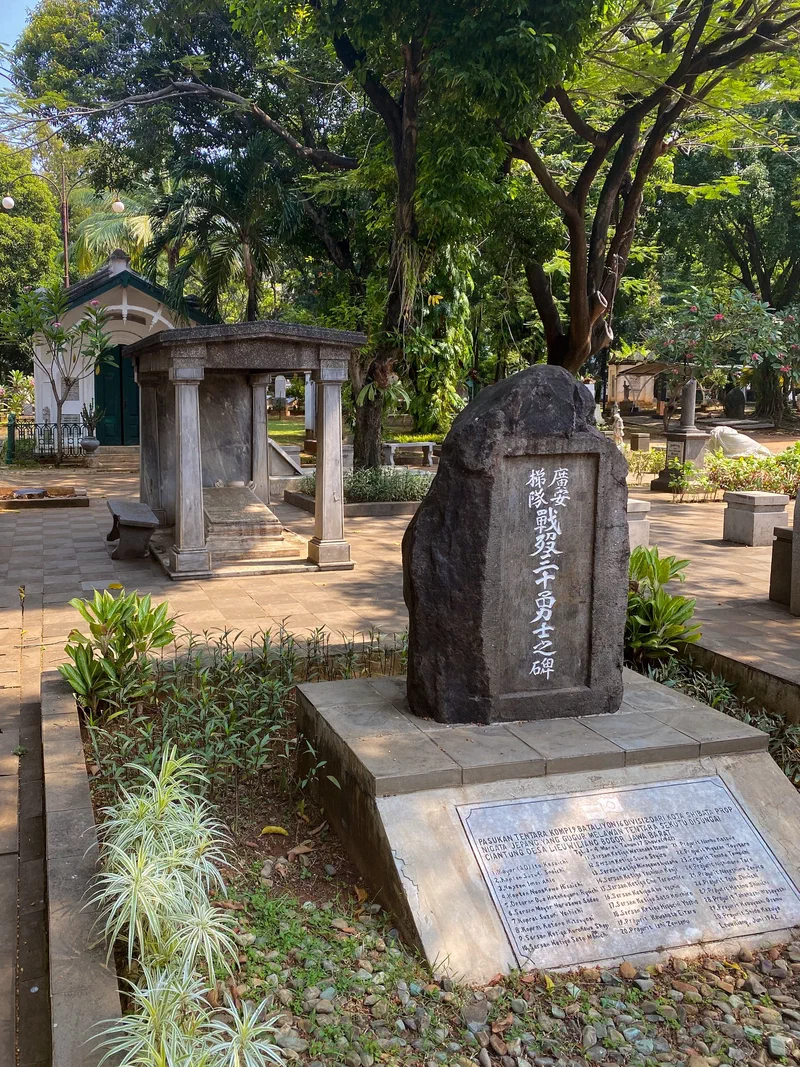
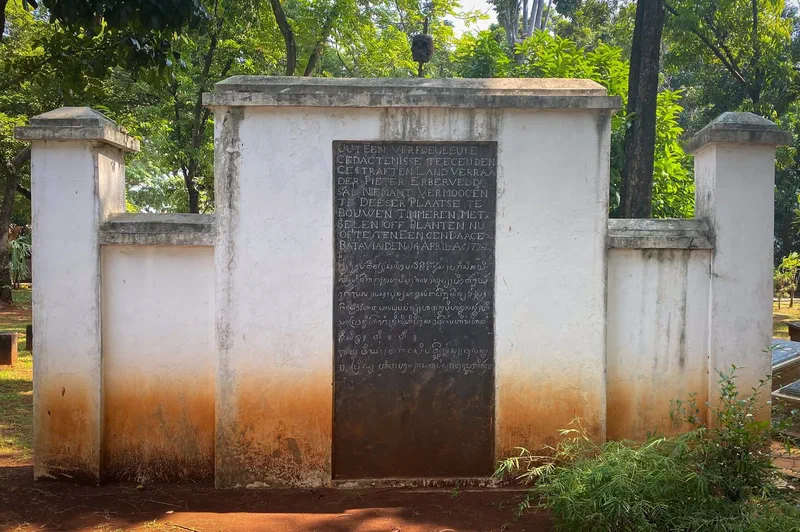
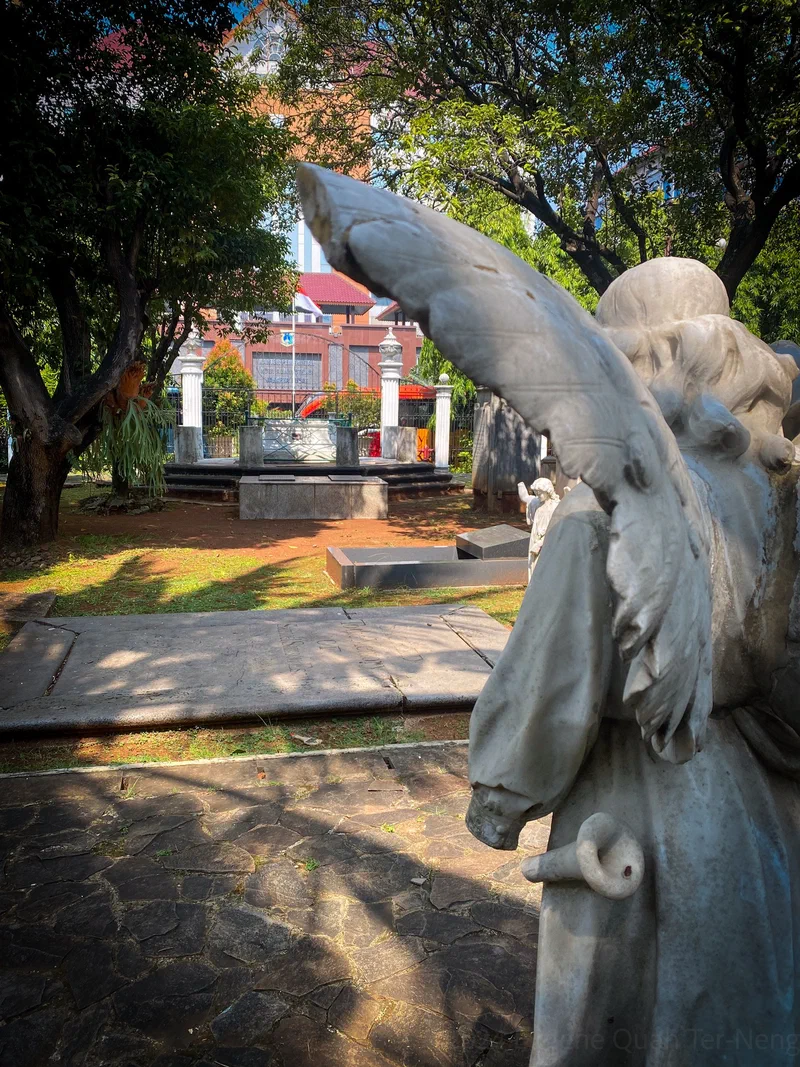
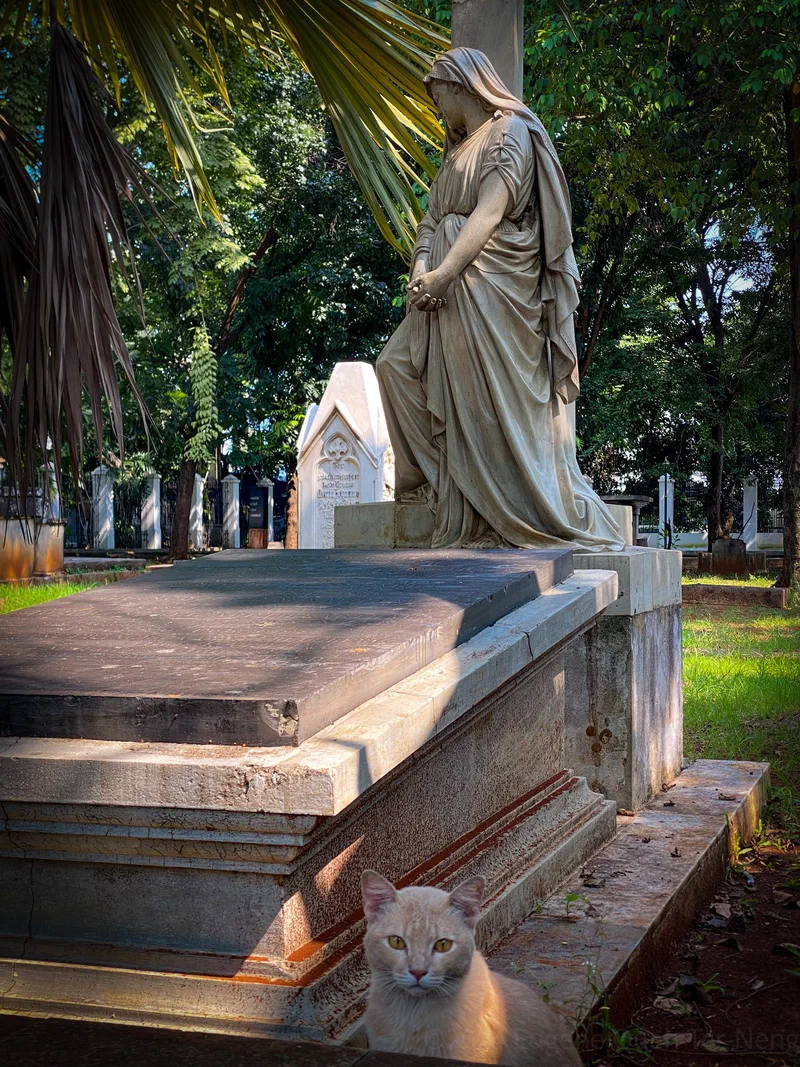
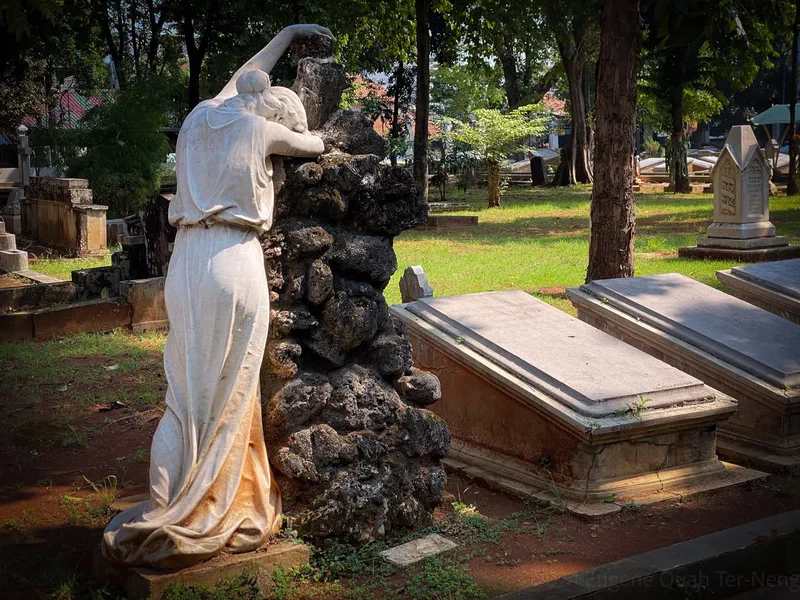
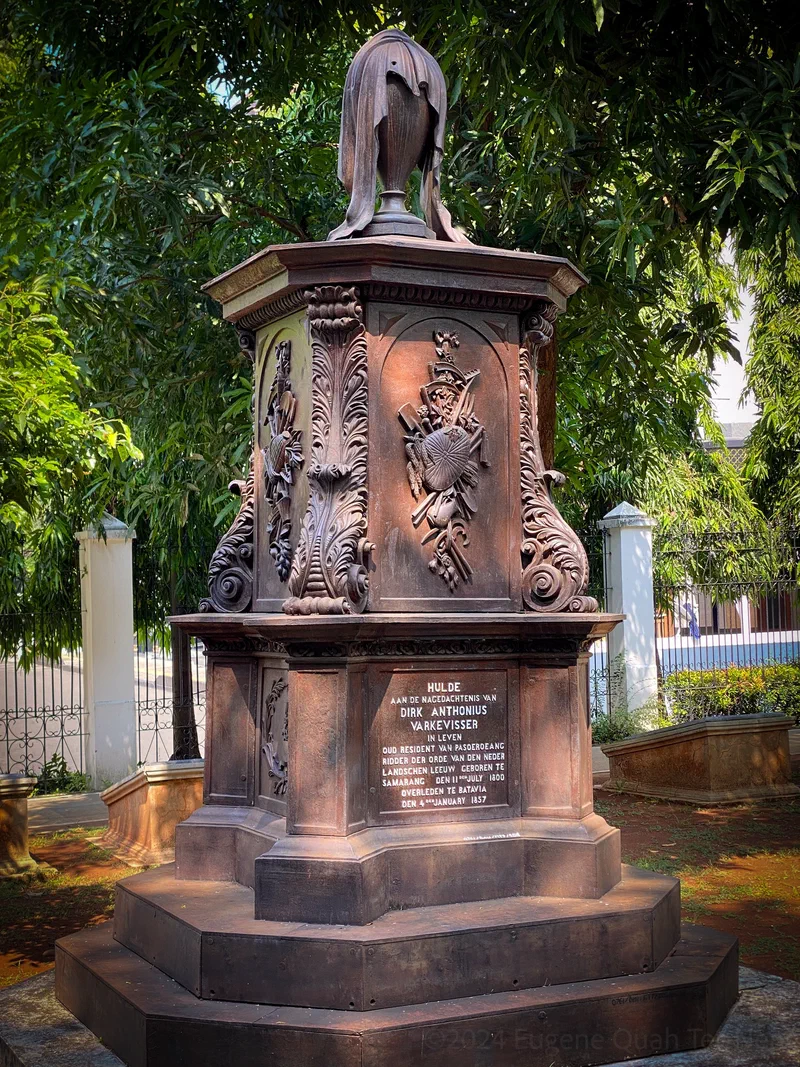
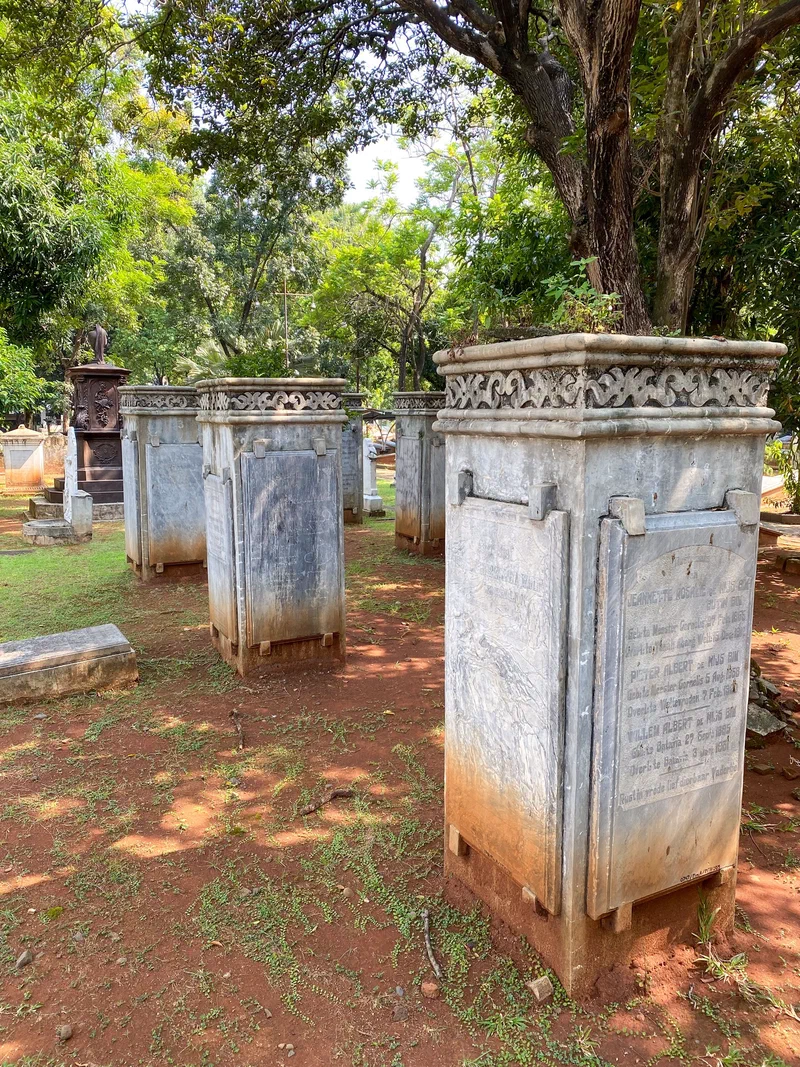
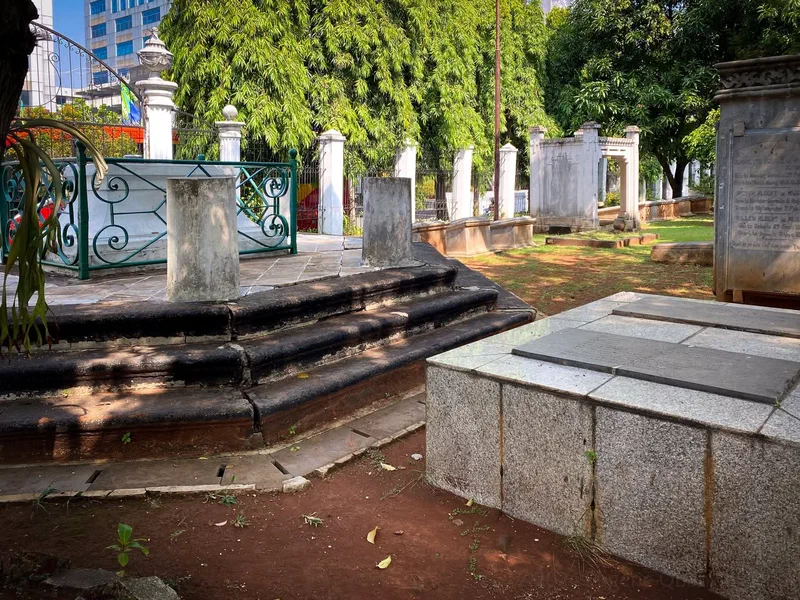
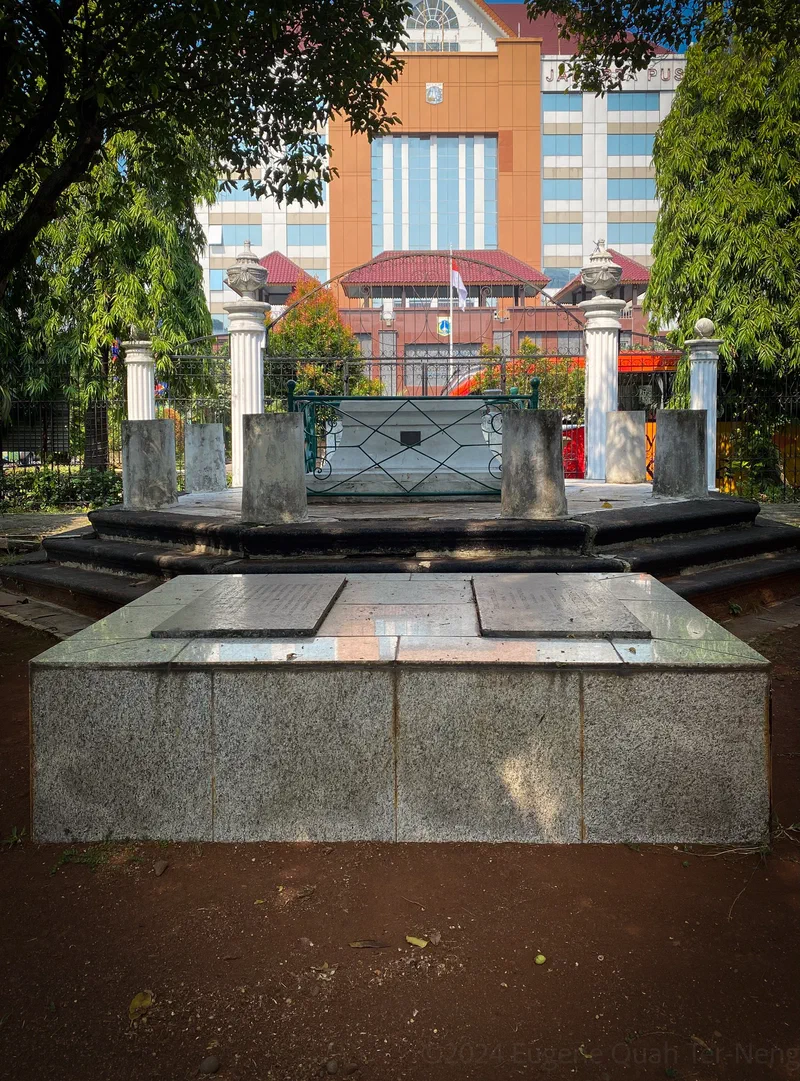
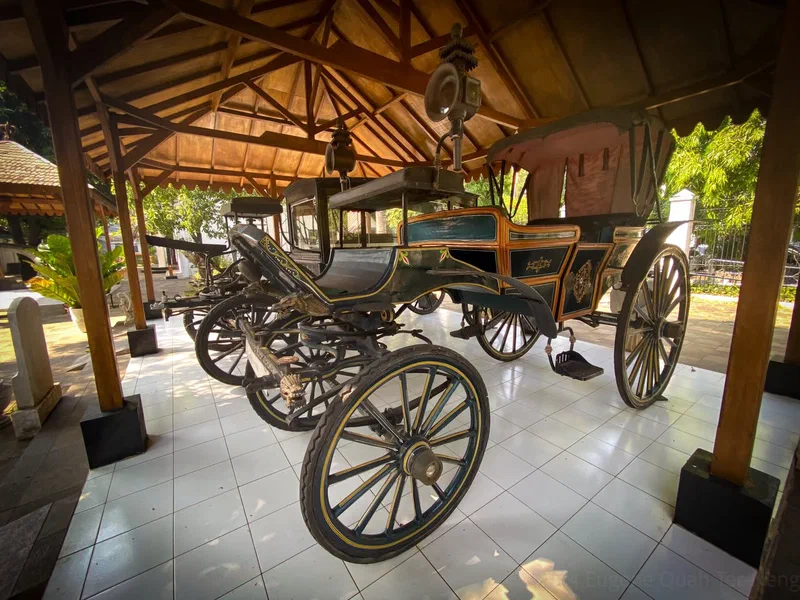
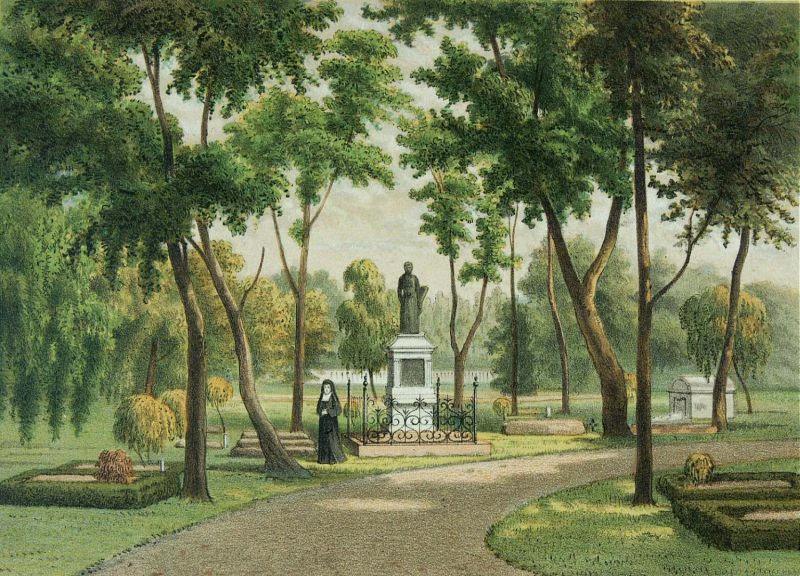
The Museum Taman Prasasti (Inscription Park Museum) is an open-air museum located in Tanah Abang, Jakarta, Indonesia. Originally established as a cemetery by the Dutch in 1795, it was created to address the overflow of existing burial grounds due to a severe epidemic in what was then known as Batavia.
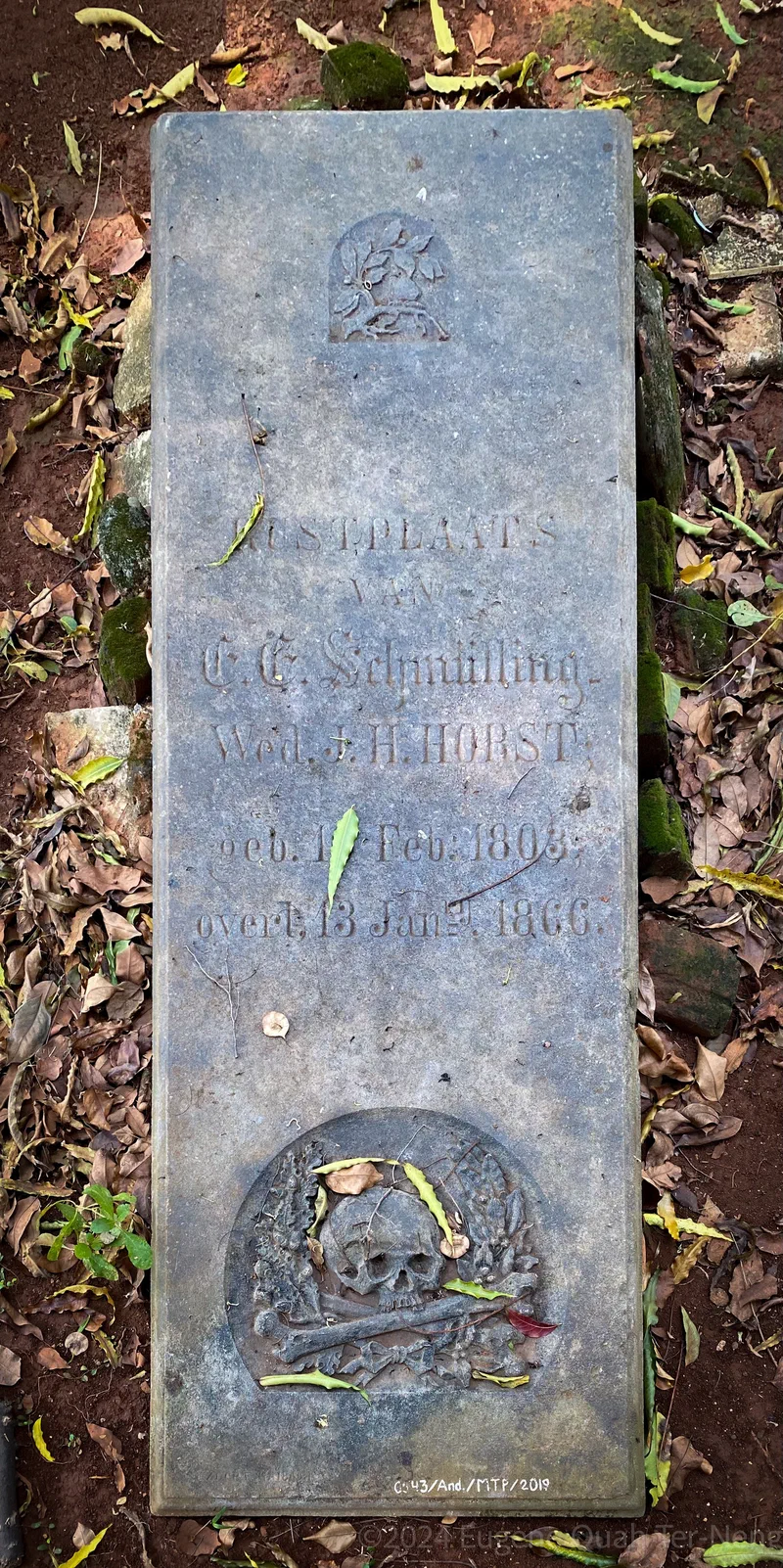
The site has undergone significant changes over time. Initially spanning 5.9 hectares, it was reduced to 1.3 hectares during the construction of the mayoral complex in the 1970s. As a result, all human remains were reinterred elsewhere, transforming the space from an active cemetery into a museum. Of the approximately 4,000 original tombstones, only 993 were chosen for preservation, with a mere 32 remaining in their original positions.
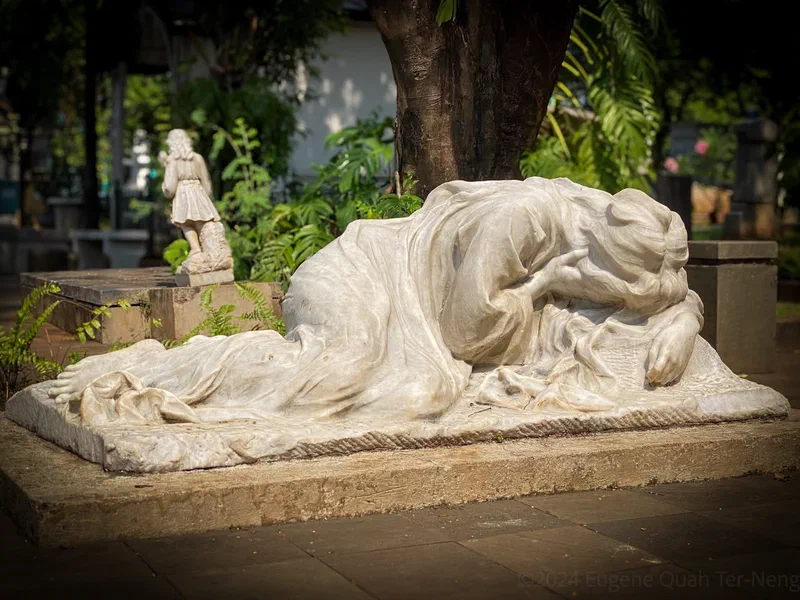
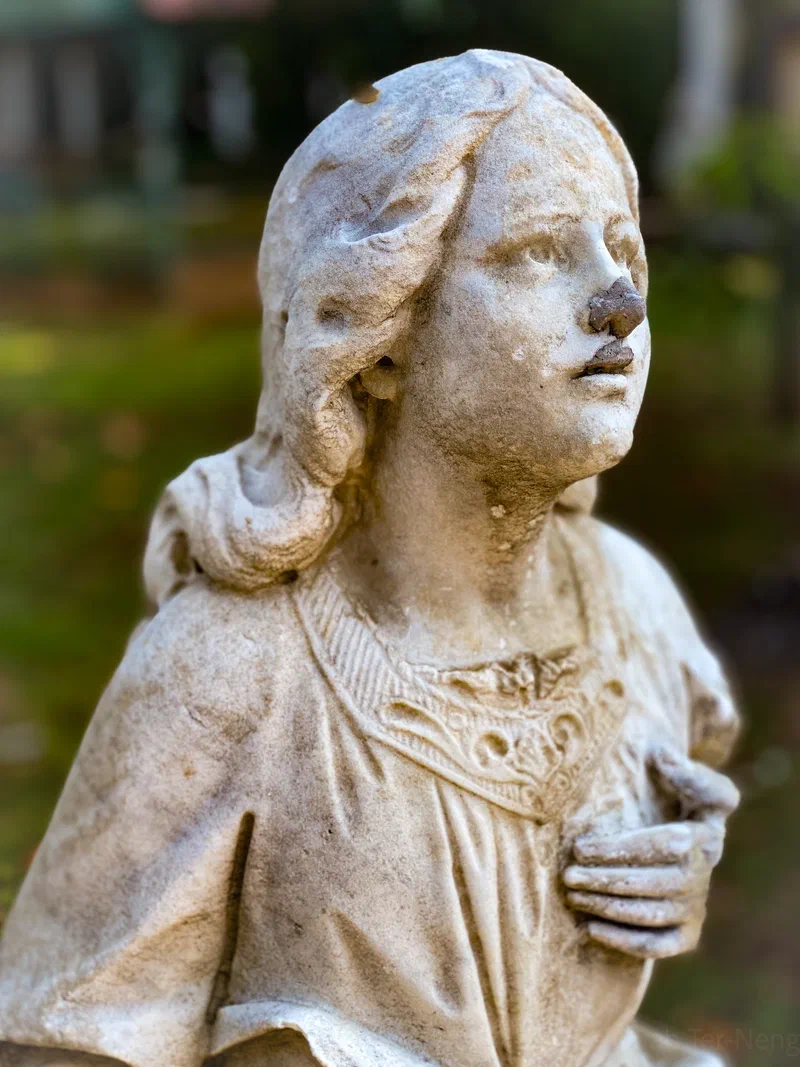
The level of artistry of these tombstones is marvellous. The life-size statues are exceptionally lifelike; some statues are so well done that robes seem to flow over their bodies and the grief is quite palpable from their poses. The entrance fee to the museum is less than RM 2 for foreigners. Well worth a visit for those interested in epigraphy and the history of Batavia.
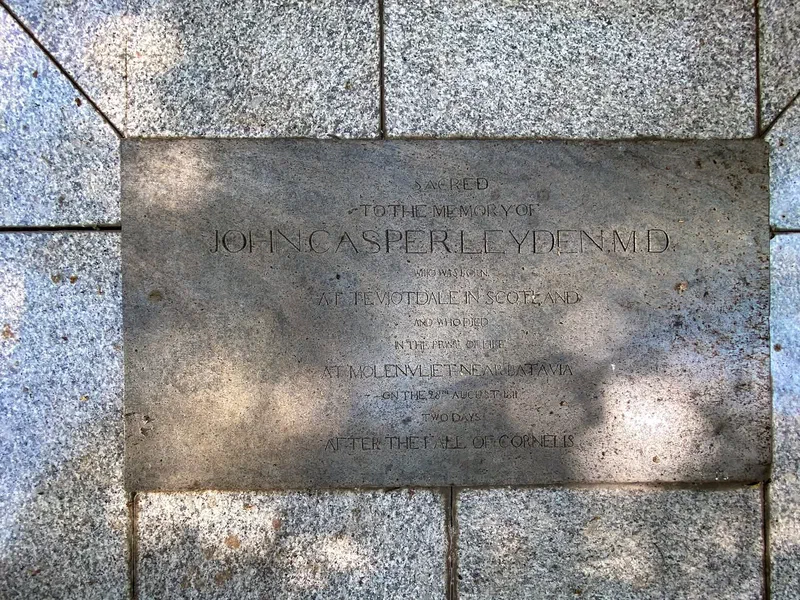
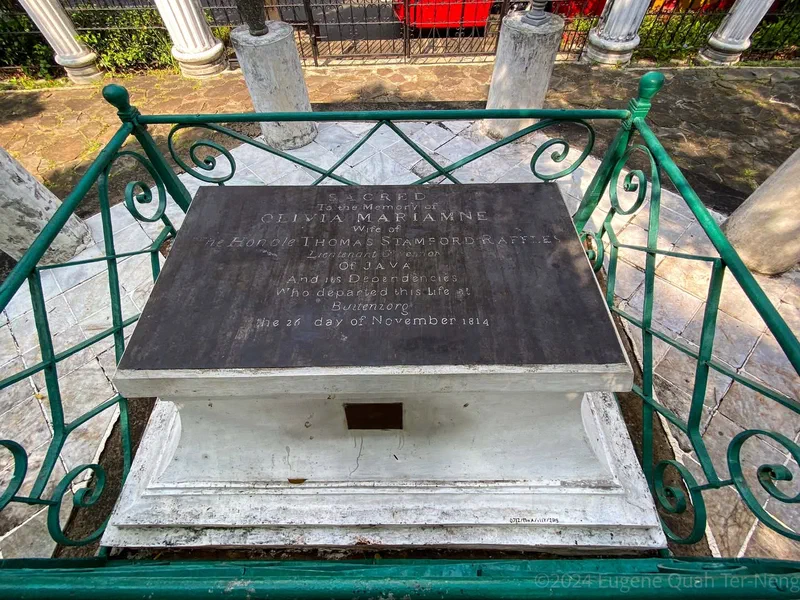
I was there to find the tomb of Olivia Raffles (d. 1814) whose name lives on at Mount Olivia in Penang - her country home. Thomas Stamford Raffles was then working for the Penang Presidency. Dr. John Casper Leyden, a brilliant orientalist was a dear friend of the Raffles and stayed with them on Mount Olivia to recuperate from illness. One of Leyden’s many achievements includes translating the Sulalatus Salatin (Sejarah Melayu) into English (published posthumously). Leyden died in 1811, just after the British expedition to capture Java. The large invasion fleet, accompanied by Lord Minto, first assembled at Penang and then sailed on to Malacca where Raffles came on board. He would later become the Lieutenant-Governor of Java.
Sources:
Jakarta Post (2008), “Dutch cemetery rich with Jakarta history”, 10 September 2008.
K.G. Tregonning (1967), “A History of Modern Malaya”
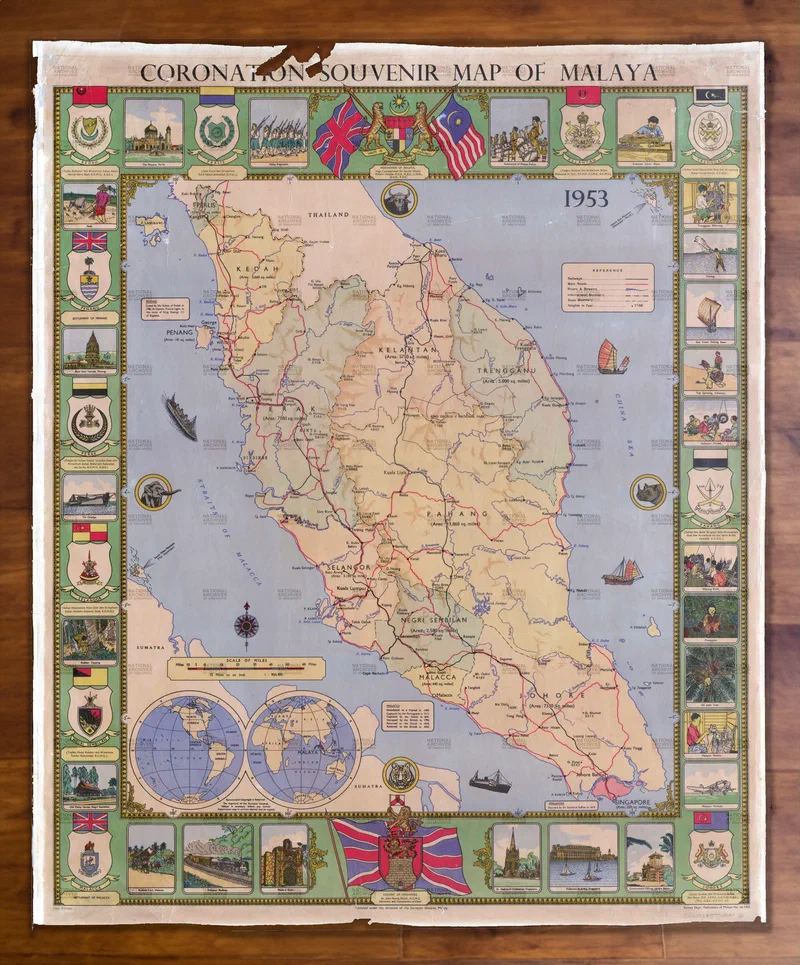
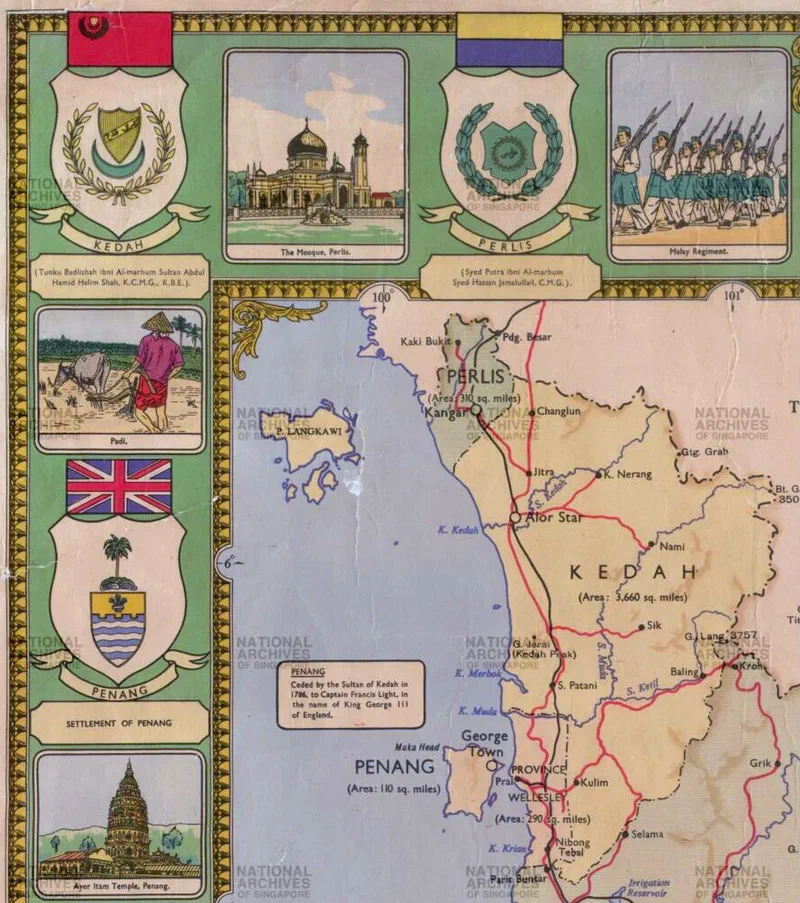
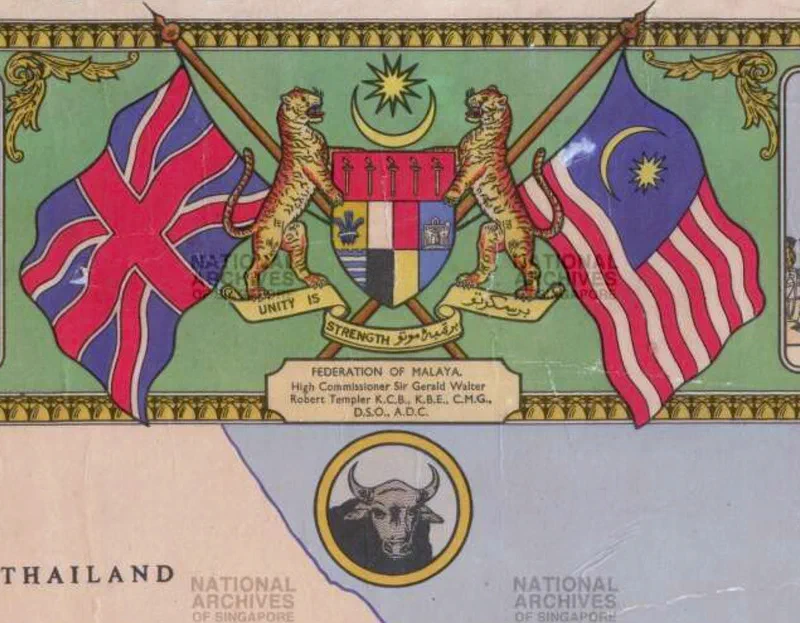
A souvenir map of the Federation of Malaya to commemorate the coronation of Elizabeth II in 1953. Notice the Malayan flag behind the Coat of Arms of the Federation of Malaya (Persekutuan Tanah Melayu) had only 11 stripes. This precursor to the current Jalur Gemilang (Stripes of Glory) was used from 1950 until the formation of Malaysia in 1963. The sides of this map are decorated with scenes representative of each state.
Does anybody want to guess what the water buffalo (kerbau) below the coat of arms of the federation means?
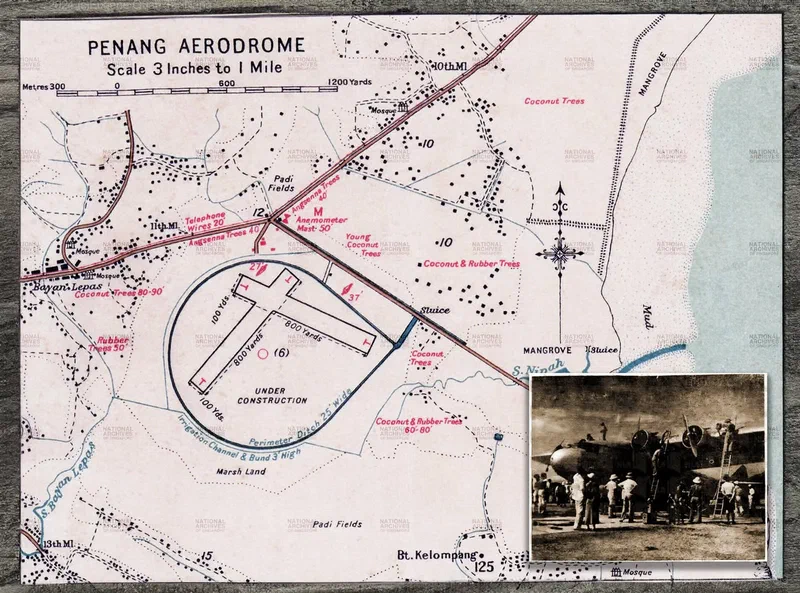
The current Penang International Airport started off as the Penang Aerodrome. This detailed plan shows the aerodrome in construction in 1935, nearing completion.
In June 1932, the government awarded the tender to construct “a landing ground for the civil aerodrome” to Phang Pak Hiong whose tender at $45,063 was the lowest.
On Sunday, 29 September 1935, the “Penang Aerodrome with its magnificent metalled runway was formally opened when the Imperial Airways homeward bound plane ‘Arethusa’ (picture inset) made a perfect landing at 9.10 a.m.” where “a large crowd of local residents” were there to greet its arrival.
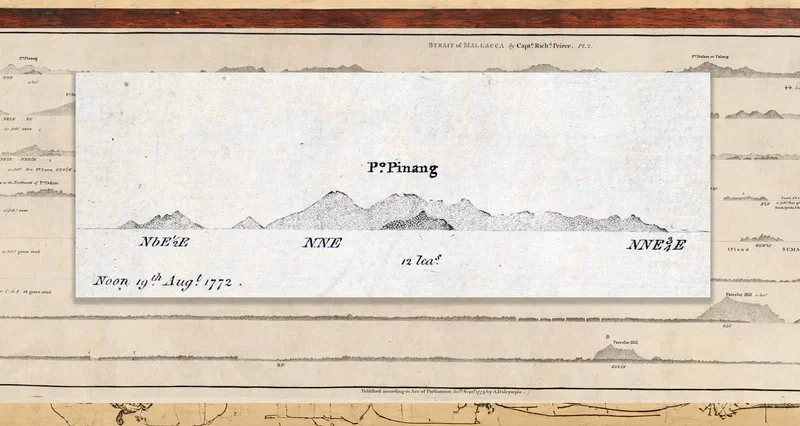
View of Po. Pinang (Pulau Pinang) as it was on Wednesday, 19th August 1772 at noon, as seen from the deck of the British East India Company (EIC) merchant ship “Earl of Ashburnham”. It was drawn by the ship’s commander Captain Richard Peirce and published by the royal hydrographer Alexander Dalrymple on 30th September 1779.
Ship’s log (abridged) shows a typical journey of an EIC vessel running the China trade route: 16th Jan - Left Portsmouth, England. 25th Jun - Arrived at Madras, India. 30th Jul - Left Madras, India. 14th Aug - Entered the Straits of Malacca. 15th Aug - Sighted Pier Rock (Pulau Perak - currently the westernmost point of Malaysia), Ladda Islands (the Langkawi archipelago) and the Malay coast (Kedah). 16th Aug - Sighted “Island of Pinang”. 26th Aug - Arrived at Malacca. 8th Oct - Arrived at Whampoa, China.
The ship likely anchored for a burial at sea on the 19th, as it was recorded that Robert Nail, a seaman, had passed away. This was likely when the sketch was drawn, about 12 English leagues (around 58 km) from Penang. It reached the Malacca roadstead a week later on the 26th, where it found three other EIC ships, the Royal Henry, Norfolk & Lioness at anchor, two miles from town. It reached its final destination Whampoa (琶洲, Pazhou) on 8th October. Below Capt. Peirce’s sketch is a modern photo of Penang - showing its entire north coast - as seen from Pulau Sayak, Kedah for comparison.
Source:
Log of the “Earl of Ashburnham”, British Library Ref: L/MAR/B/542D.
Charles Horatio Hardy (1811), “A Register of Ships, Employed in the Service of the HEIC, 1760-1819”
Join me and Moe (Mohammad Nasrullah Bin Zulkifli) in the fifth episode of season 1 of the People of Penang Podcast as we chat with the fabulous couple, David ST Loh and Rebecca Loh. We delve into topics like drone photography, running a publishing house and art business, covering news in war zones, and much more. They also shared their harrowing experience of opening an art gallery amidst a global pandemic.
Don’t miss our crazy headgear and an overview of some of David and Rebecca’s gorgeously produced books. Notably, David’s book, “Over Penang,” won the Malaysian National Library Book Awards 2020 in the English (Adult) category.