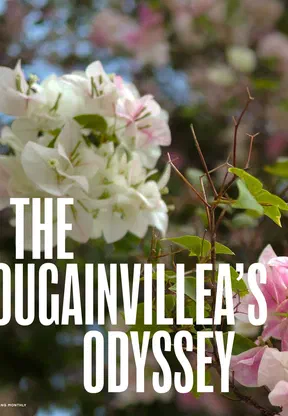
The Bougainvillea's Odyssey
Précis
This précis was automatically generated based on the full article text.
Bougainvillea, bunga kertas or ‘paper flower’ in Malay, grows everywhere in Malaysia. What look like its petals are papery leaves called bracts. It comes from South America, and its story begins with a remarkable woman.
In 1766 France sent Admiral Louis-Antoine de Bougainville around the world. The naturalist Philibert Commerçon brought along his ‘assistant Jean’, really his partner Jeanne Baret, disguised as a man because women were banned from navy ships. In Brazil in 1767, while Commerçon was ill, Baret collected the climbing plant later named after the admiral. Her disguise was discovered in Tahiti, and she eventually became the first woman known to have sailed around the globe.
The plant spread through colonial gardens to Asia. The botanist R.E. Holttum described three main kinds grown here, including the year-round B. glabra and the brick-red ‘Mrs. Butt’, which came from a Trinidad garden via Florida and Kew. Travellers saw bougainvilleas in Melaka and Singapore in the 1870s and 1880s. In 1988 Ipoh adopted it as its city flower.
Key points
- Bougainvillea was first recorded as a plant name in 1789, by Antoine Laurent de Jussieu.
- Bougainvillea glabra probably reached Malaysia around 1870.
- 'Mrs. Butt' reached Singapore in 1923 and does especially well in Penang.
- There are more than 300 recognised varieties.
- It is the city flower of Xiamen and the national flower of Grenada.
Why it matters
A familiar garden plant turns out to carry a story of science, courage and global exchange, and it gives due credit to a pioneering woman botanist.
- Places
- Rio de Janeiro, Mauritius, Melaka, Singapore, Ipoh, Penang
- Subjects
- Bougainvillea, Jeanne Baret, Philibert Commerçon, Louis-Antoine de Bougainville, Richard Eric Holttum