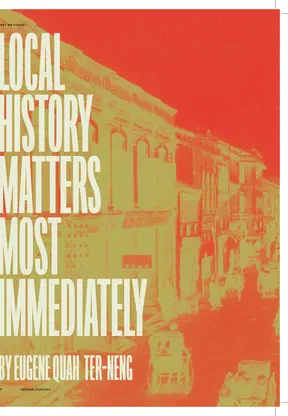
Local History Matters Most Immediately
Précis
This précis was automatically generated based on the full article text.
Many people remember school history as boring lists of dates and kings. Yet when they read local history, about their own streets and schools, they often say, ‘I didn’t realise history was so interesting.’ Eugene Quah argues that the difference is storytelling.
He compares a dry textbook line about penicillin with the real story of Alexander Fleming noticing mould on a culture plate and saying ‘That’s funny.’ Our brains are built for stories, he says, yet Malaysia’s 2018 history textbook has replaced narrative with information boxes and bullet points.
Local history, he argues, is where ordinary people can contribute. Many of his own discoveries began with a ’that’s funny’ moment: why is there a Miami Beach at Batu Ferringhi? Why are there military ruins on Pearl Hill? Good history must still rest on primary sources and fair interpretation, and he ends by listing places where readers can start their own research.
Key points
- 'History' and 'story' share a root. The French histoire means both.
- Professional historians are few, so amateur researchers have an important role.
- Marcus Langdon likens local history research to a crime-scene investigation.
- William Dalrymple warns that re-examining history must be based on facts, not politics.
- Suggested resources include the Singapore National Archives, Google Books, the Penang Heritage Trust Facebook group and the Penang Monthly archives.
Why it matters
The essay makes a case that knowing our local stories strengthens the shared identity a society needs, and it gives readers practical encouragement to take part.
- Places
- Penang, Malaysia
- Subjects
- local history, William Storr, Alexander Fleming, Mike Gibby, Marcus Langdon, William Dalrymple