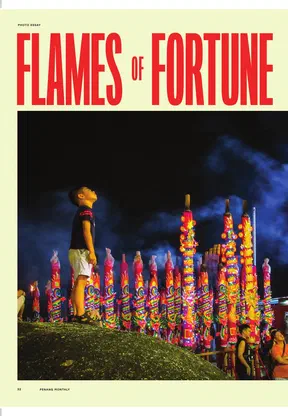
Flames of Fortune: The Chneah Hoay Ceremony at Penang's Oldest Chinese Temple
Précis
This précis was automatically generated based on the full article text.
On the eve of Chap Goh Meh, the last night of Chinese New Year, Eugene Quah and a Penang Heritage Trust friend went to watch the Chneah Hoay (‘fire invitation’) ceremony at the Hai Choo Su Tua Pek Kong Temple in Tanjung Tokong. The temple dates back to 1799 and is the oldest Chinese temple in Penang.
Every year the Poh Hock Seah society carries a sacred incense urn in procession from Armenian Street in George Town to the temple. At midnight, at high tide, the lights go out and the gates close. Committee members fan the urn three times and watch how high the flames rise, one reading for each third of the year.
The tradition has been used for more than a century to predict how business will fare. The 2024 forecast was ‘average to good’.
Key points
- The temple honours Chang Li, a Hakka scholar who became revered as the Tua Pek Kong deity.
- Hai Choo Su ('Sea Pearl Islet') refers to the nearby islet of Pulau Tikus.
- The Poh Hock Seah was formed in the 1890s.
- A Tua Pek Kong procession to Tanjung Tokong was reported as early as 1857.
Why it matters
The ceremony is a living link between Penang's Chinese merchant community, its oldest temple and the economic hopes of each new year.
- Places
- Tanjung Tokong, Armenian Street, Pulau Tikus, Penang
- Subjects
- Chneah Hoay ceremony, Hai Choo Su Tua Pek Kong Temple, Poh Hock Seah, Chang Li